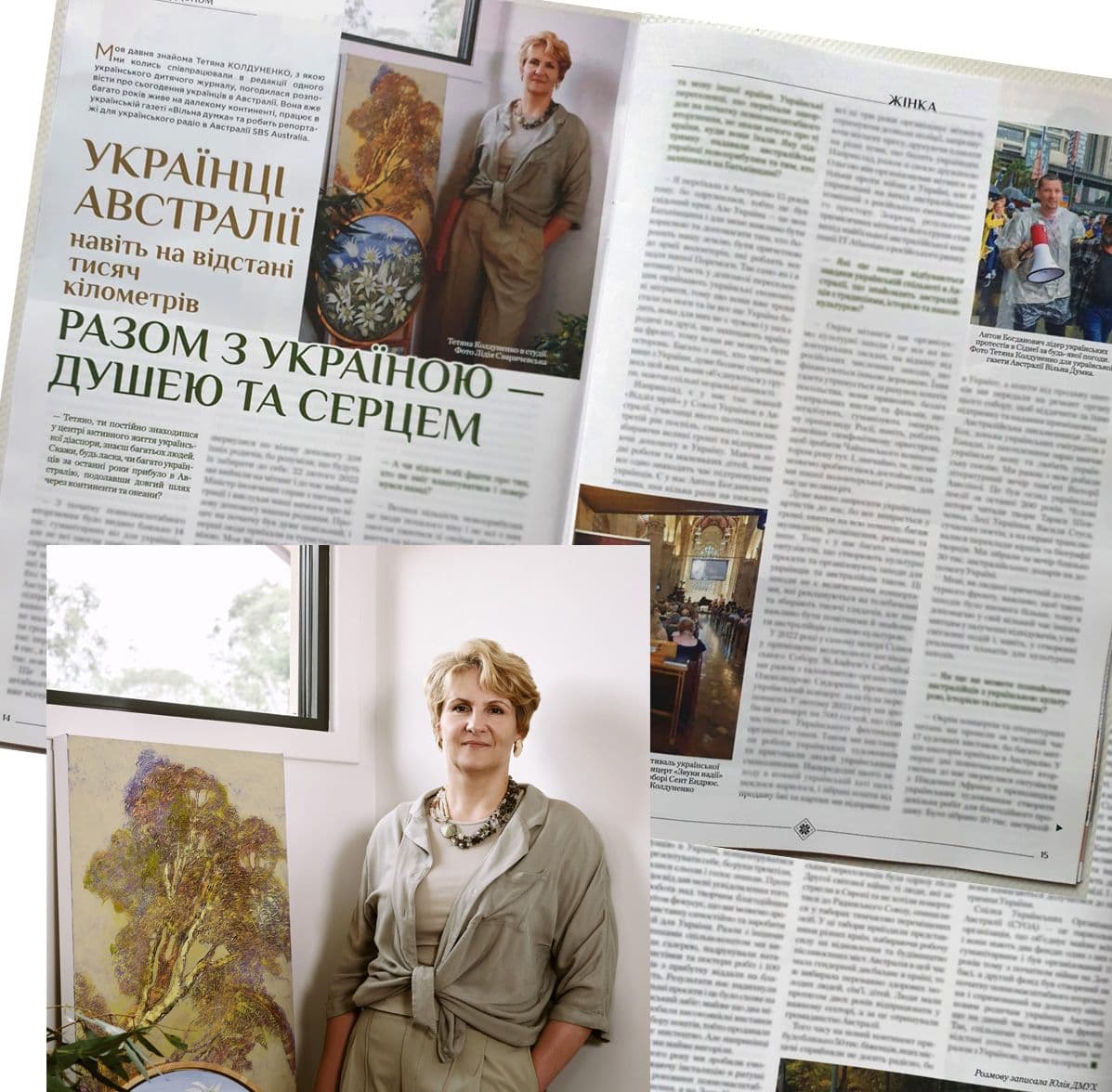
I’m honoured to be featured in the Ukrainian magazine The Woman, where I share my journey as an artist and as a Ukrainian woman living and creating in Australia. The article reflects on my creative path, the experiences that shaped my practice, and the way art has helped me stay connected to both place and identity while building a life on the other side of the world.
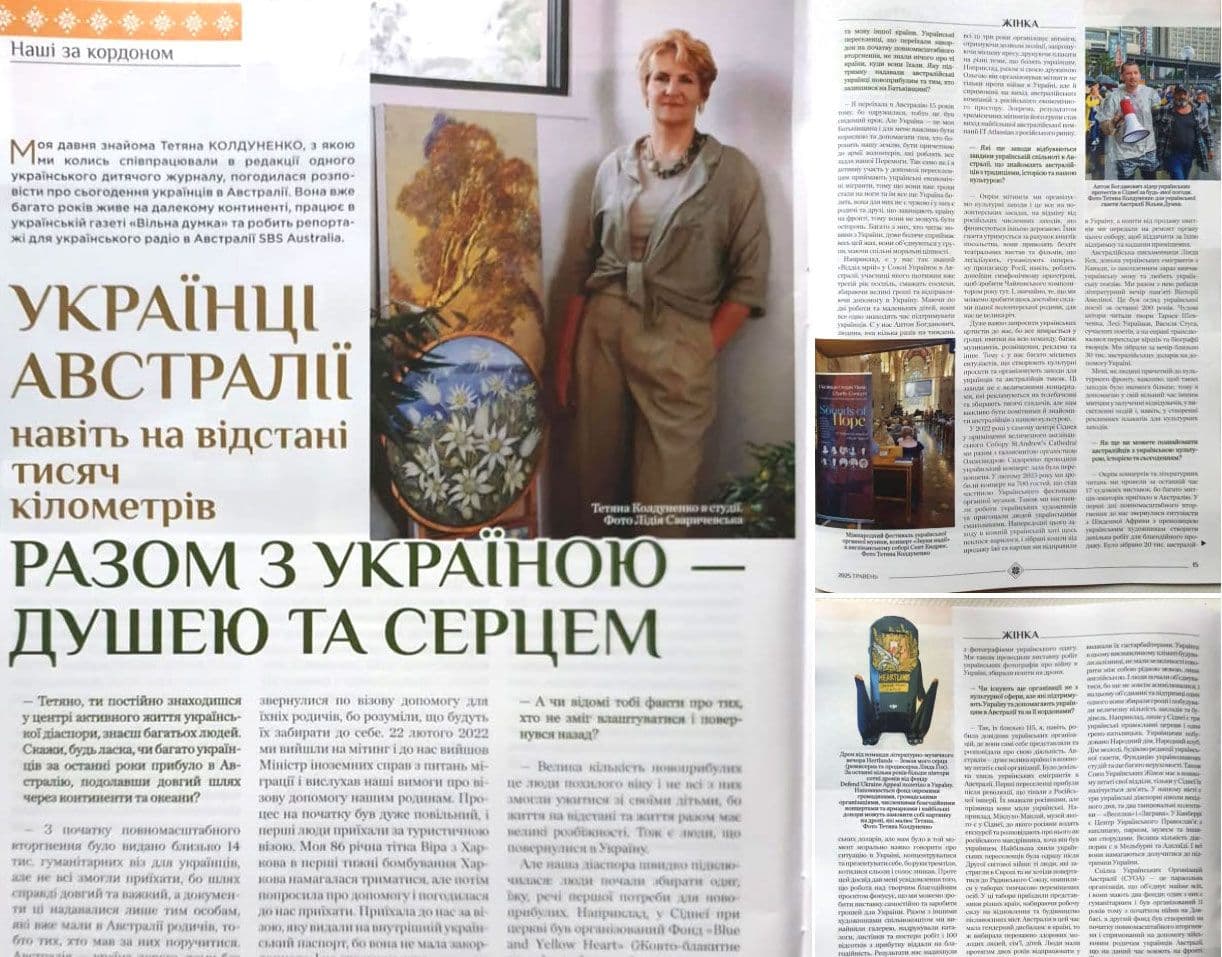
Living between two countries has taught me that connection to homeland doesn’t disappear with distance — it transforms. Through my work, I carry memories, values, and cultural references from Ukraine into my life in Australia, creating a quiet dialogue between the two. Art becomes a bridge, linking landscapes, histories, and emotional ties across continents, and allowing me to feel grounded in both places at once.
It is always meaningful to see this story resonate beyond my immediate community, especially when it reaches readers who may recognise their own experiences of migration, belonging, and cultural memory. I’m grateful to the editorial team for their interest and thoughtful approach to telling my story.
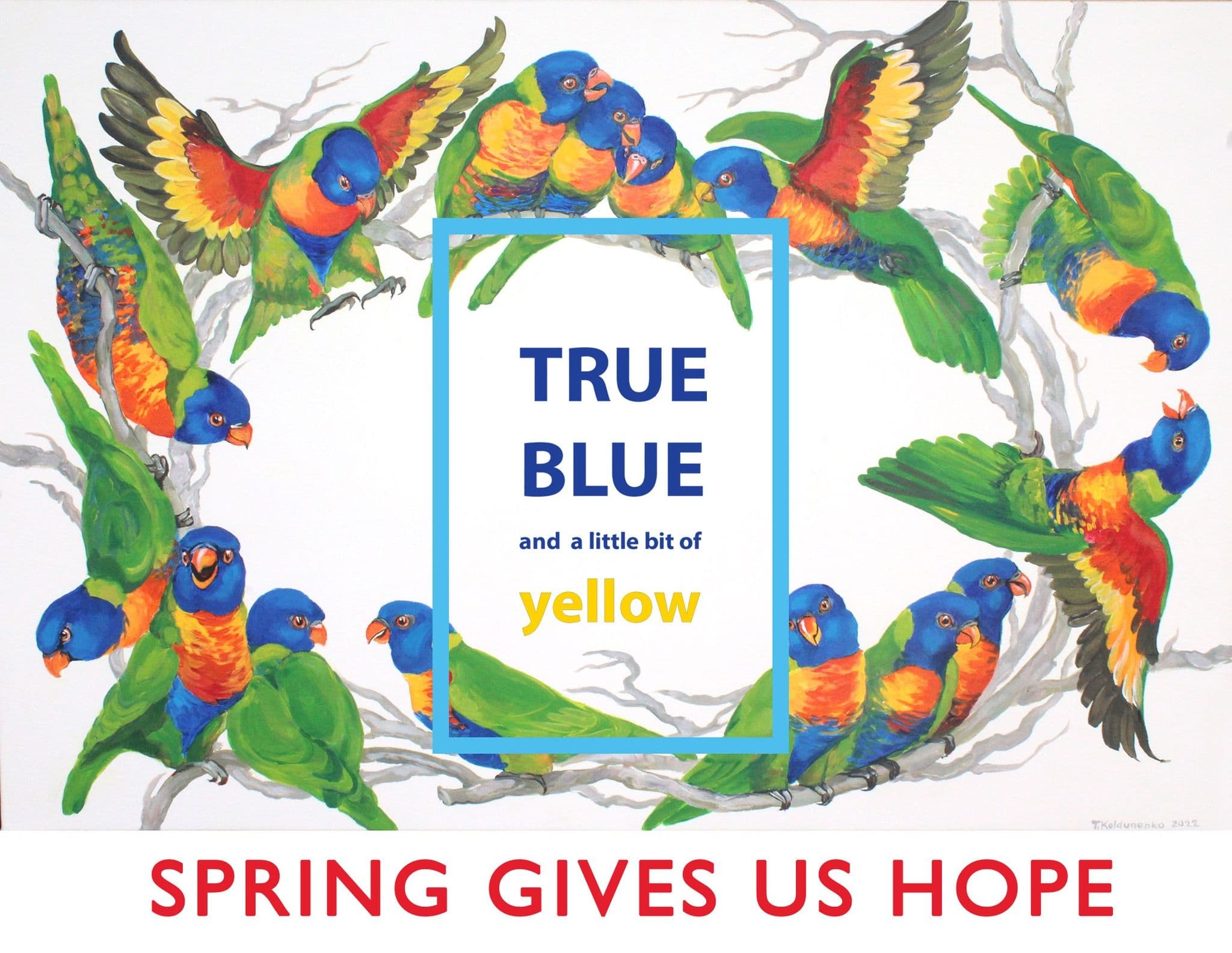
Spring Gives Us Hope was a fundraising exhibition by True Blue & a Little Bit of Yellow, held at Mona Vale Pop-Up Gallery on Sydney’s Northern Beaches from 17–28 October 2022. Unstoppable in our commitment, we continued to paint, exhibit, and raise funds to support those in need, using art as a way to respond, connect, and help. The exhibition was filled with colour and optimism — flowers, birds, and vibrant palettes came together to reflect renewal, resilience, and the emotional lift that spring brings. It was an uplifting visual response during a difficult time, offering light and hope through art. We are deeply grateful to everyone who visited, supported the exhibition, and purchased artworks. Your generosity made a real difference. Knowing that, once again, art could help support the people of Ukraine is something that continues to warm our hearts.
18 September 2026
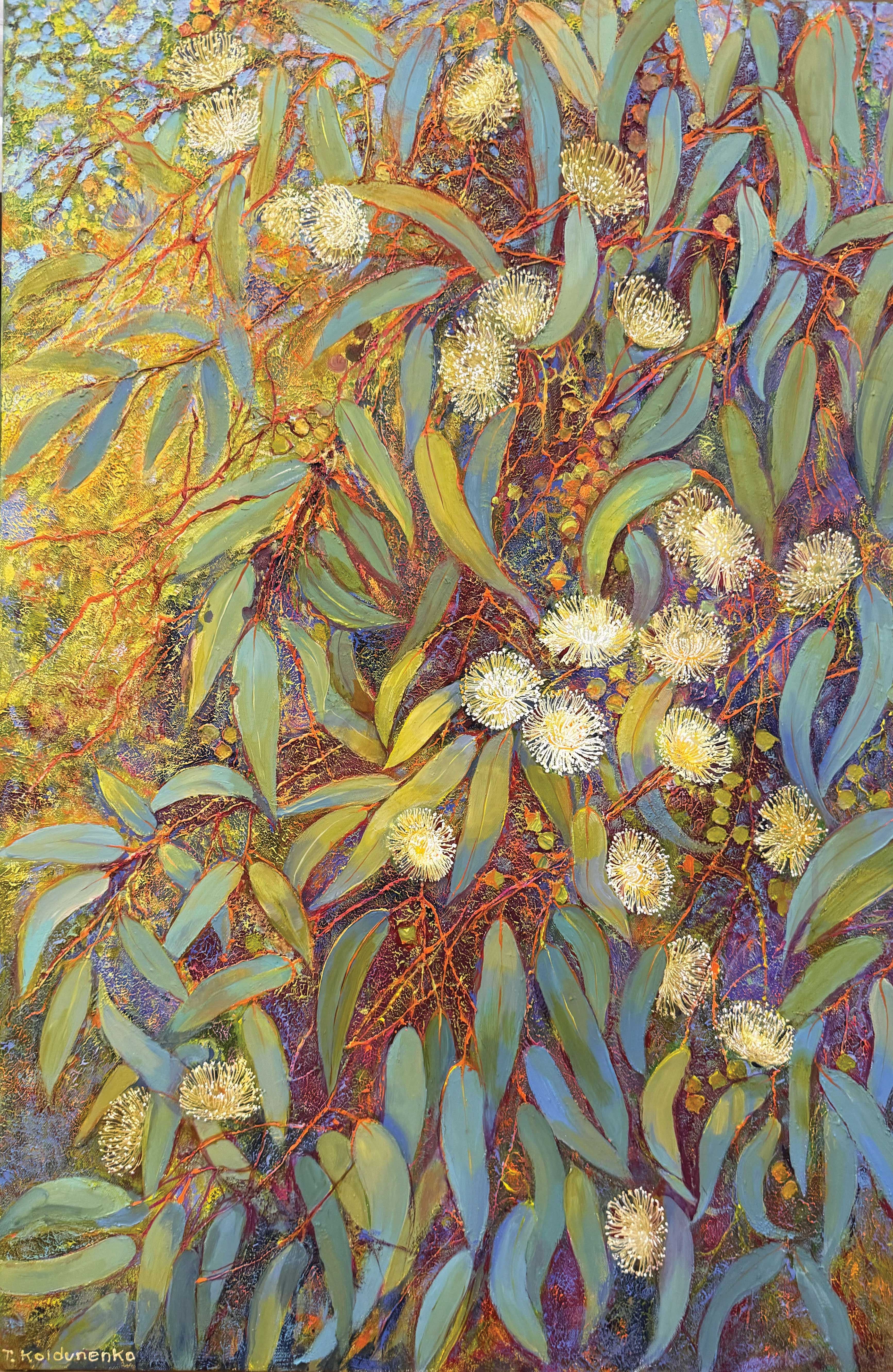
A Visual Conversation in Texture and Colour Paintings by Tetiana Koldunenko & sculptures by Deanne Palmer Gallery 11:11 presents two artists inspired by their local bushland, each translating nature through colour and texture in distinctly different materials—textured painting and encaustic sculpture. Through these contrasting approaches, familiar flora is no longer singular, but reimagined, open to multiple ways of seeing, sensing and connecting with the landscape. This dialogue becomes fully present through the physical encounter with Tetiana’s painted reliefs and Deanne’s sculptural forms. Together, the paintings and sculptures celebrate the richness of Australian flora through two distinct yet complementary artistic languages. Opening 5:30 – 7:30 pm Friday 18 September. Complimentary Ukrainian Cake Tasting Free admission. Gallery 11:11 227 Malton Road (cnr Malton and Norfolk road - Norfolk road entry) North Epping NSW 2121 Australia Open hours