Knowing your tools deeply — how they behave, how they age, how they respond to light and heat — changes the way you work and the confidence with which you make decisions.
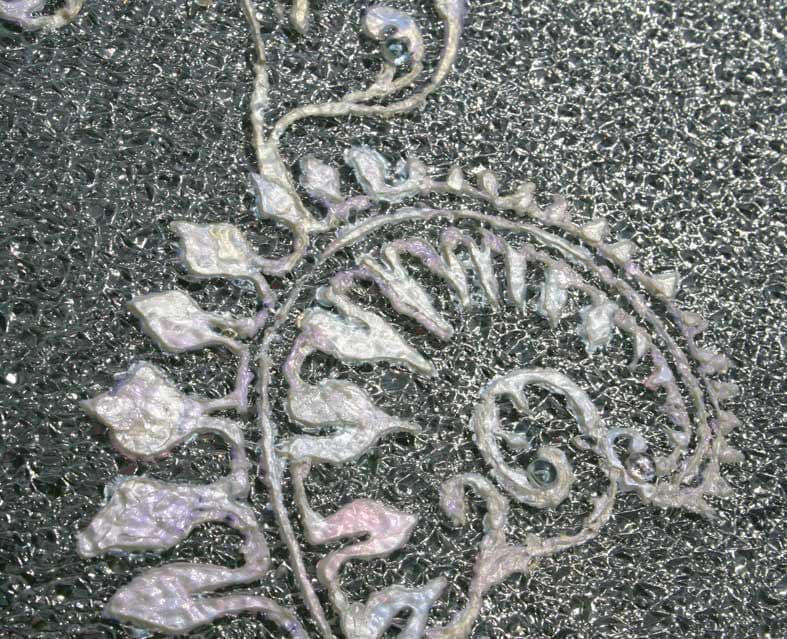
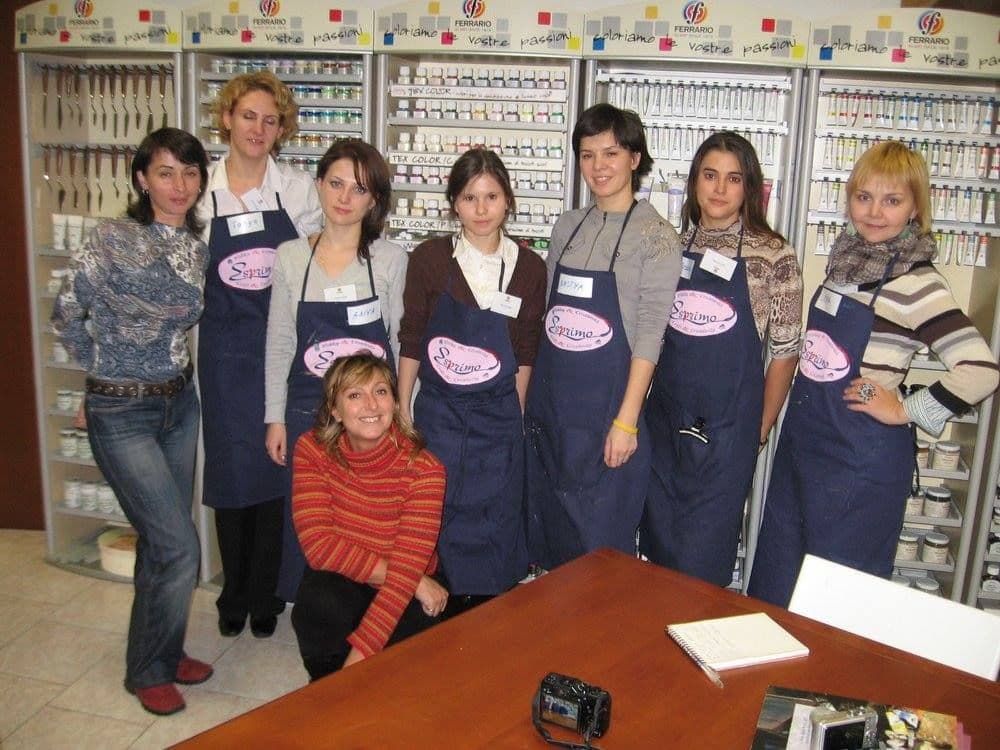
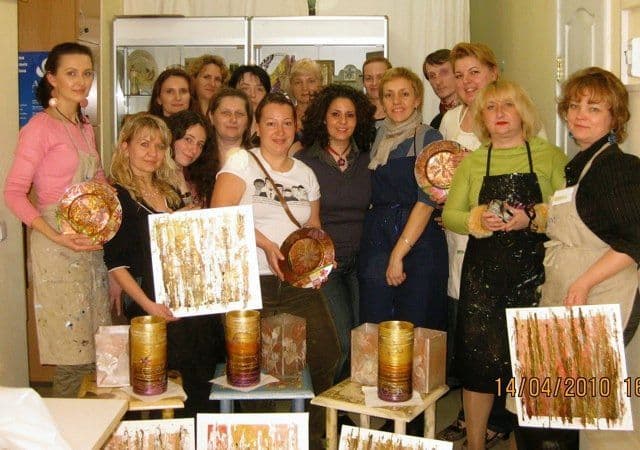
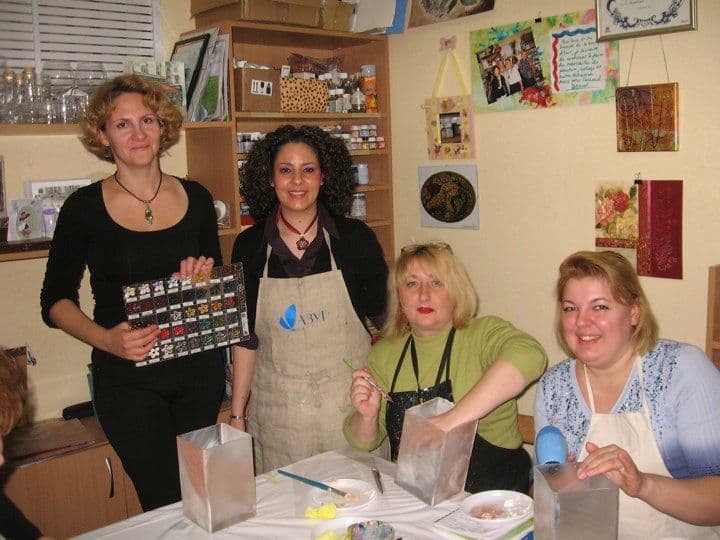
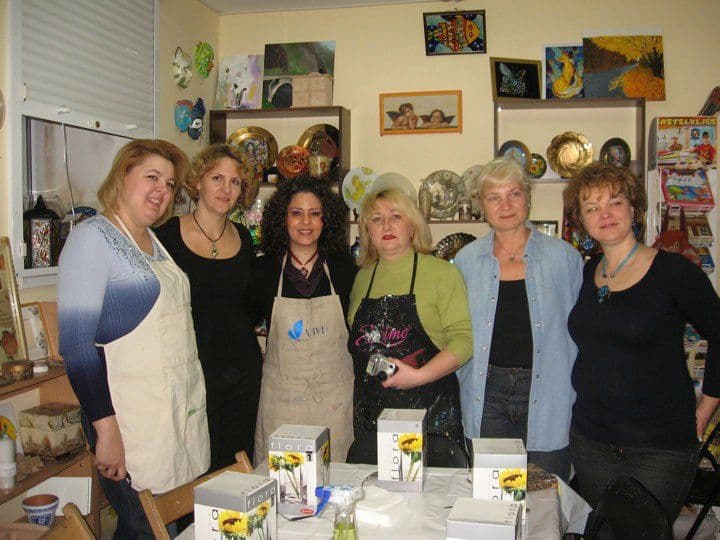
During my time at Azur Studio in Kyiv, we took part in a number of art trips across Europe, visiting paint and medium manufacturers directly. These experiences were invaluable. Being able to ask questions about materials from the people who created them — the chemists, designers, and technicians behind the products — gave us insights no manual or catalogue ever could. Who could know the materials better than those who developed them?
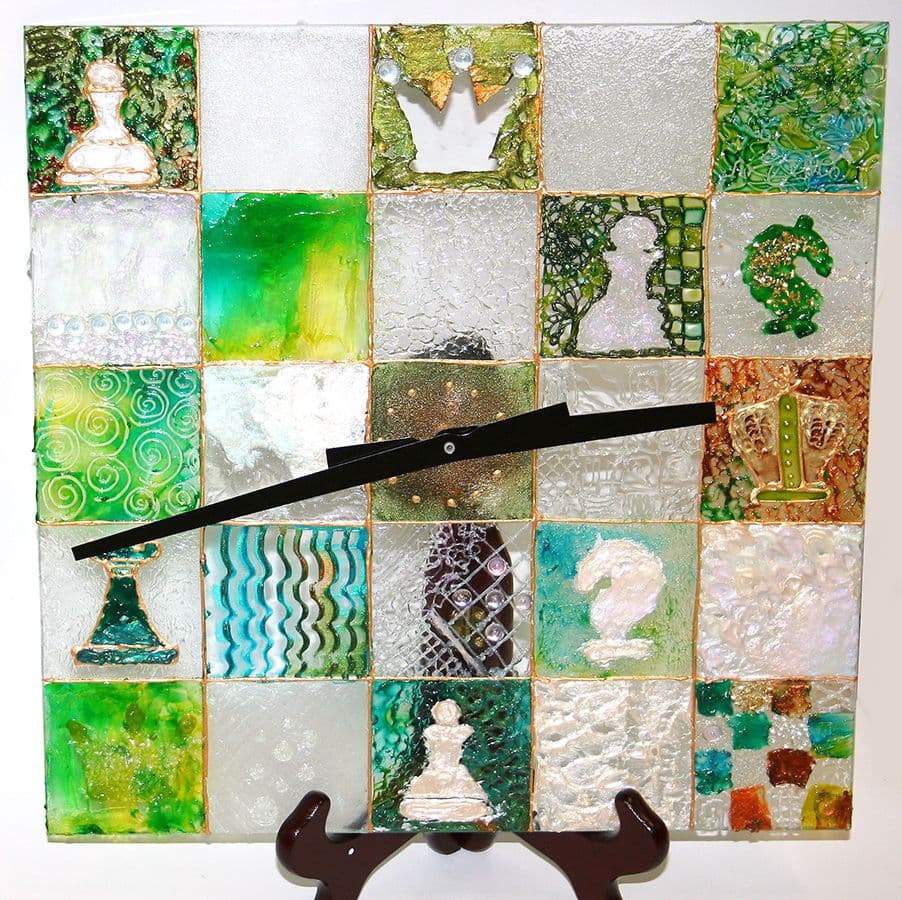
Along the way, we also participated in workshops with local designers who introduced us to the full potential of different gels and pastes, transparent and opaque paints, and specialised products for textile decoration and pseudo stained glass. We explored techniques for creating patina, working with gilding, and layering surfaces in ways that expanded both technical knowledge and creative possibility.
I often find myself missing those times — being surrounded by like-minded professionals, travelling, learning, experimenting, and talking endlessly about what we loved most: paint, surface, and decoration. Those journeys shaped not only my technical approach, but also my respect for materials as active partners in the creative process.
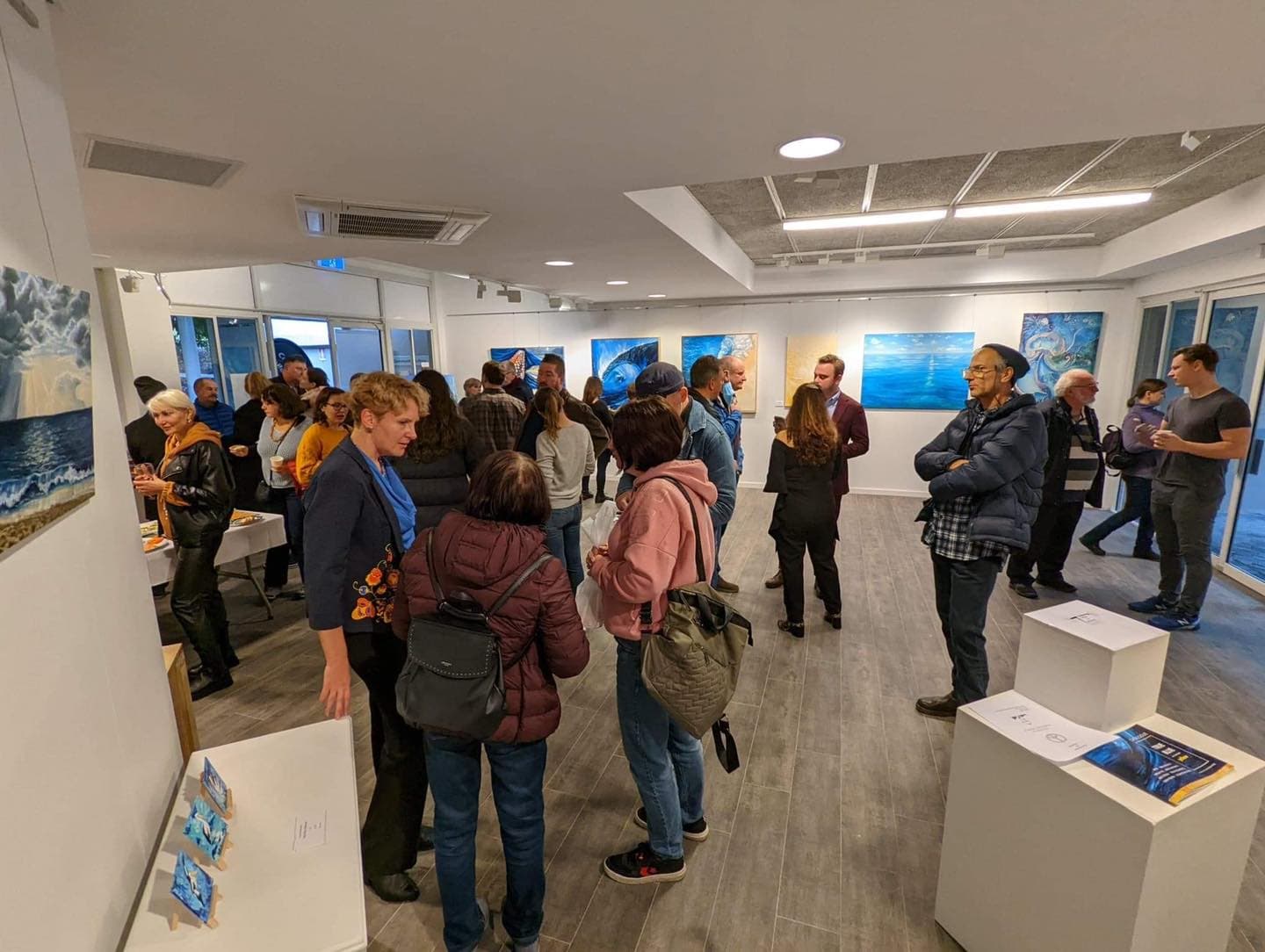
The exhibition True Blue & a Little Bit of Yellow at Gosford Community Gallery was the first of many we held during the first three years of Russia’s full-scale invasion of Ukraine. It marked a moment when art became a way to stand together, to act, and to help. Seven Australian artists of Ukrainian descent, all living and working in Australia, came together to sell artworks and raise funds for Ukrainians in need. The theme — blue and yellow — was both simple and deeply felt: a tribute to the ocean, to emotion, and to shared experience. We are endlessly grateful to everyone who visited, supported the exhibition, purchased artworks, or made a donation. This exhibition ran from 27 June to 1 July 2022, and it set the tone for everything that followed.
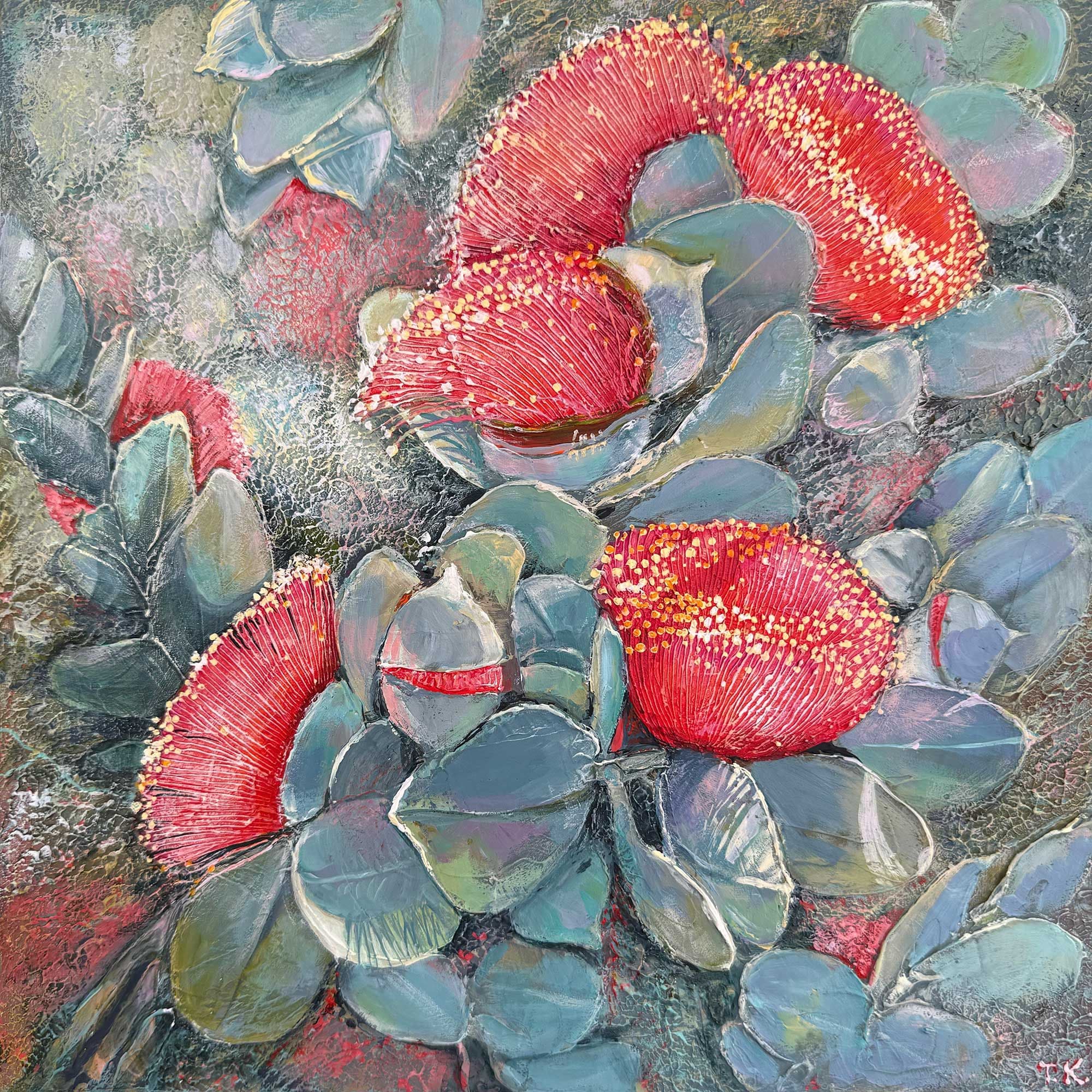
I am delighted to share that my artwork Light Between Us has been selected as a finalist in the North Sydney Winter Art Prize 2026. This piece continues my exploration of Australia's natural landscape through texture, light, and colour. Created with acrylic and texture paste on a wooden panel, Light Between Us invites viewers to pause and appreciate the quiet beauty found in nature and the subtle connections that exist between trees, light, and the people who experience them. Light Between Us 2026 Acrylic and texture paste on wood 30 × 30 cm The Winter Art Prize brings together a diverse collection of works by talented artists from across the region. It is an honour to have my work exhibited alongside so many inspiring artists.