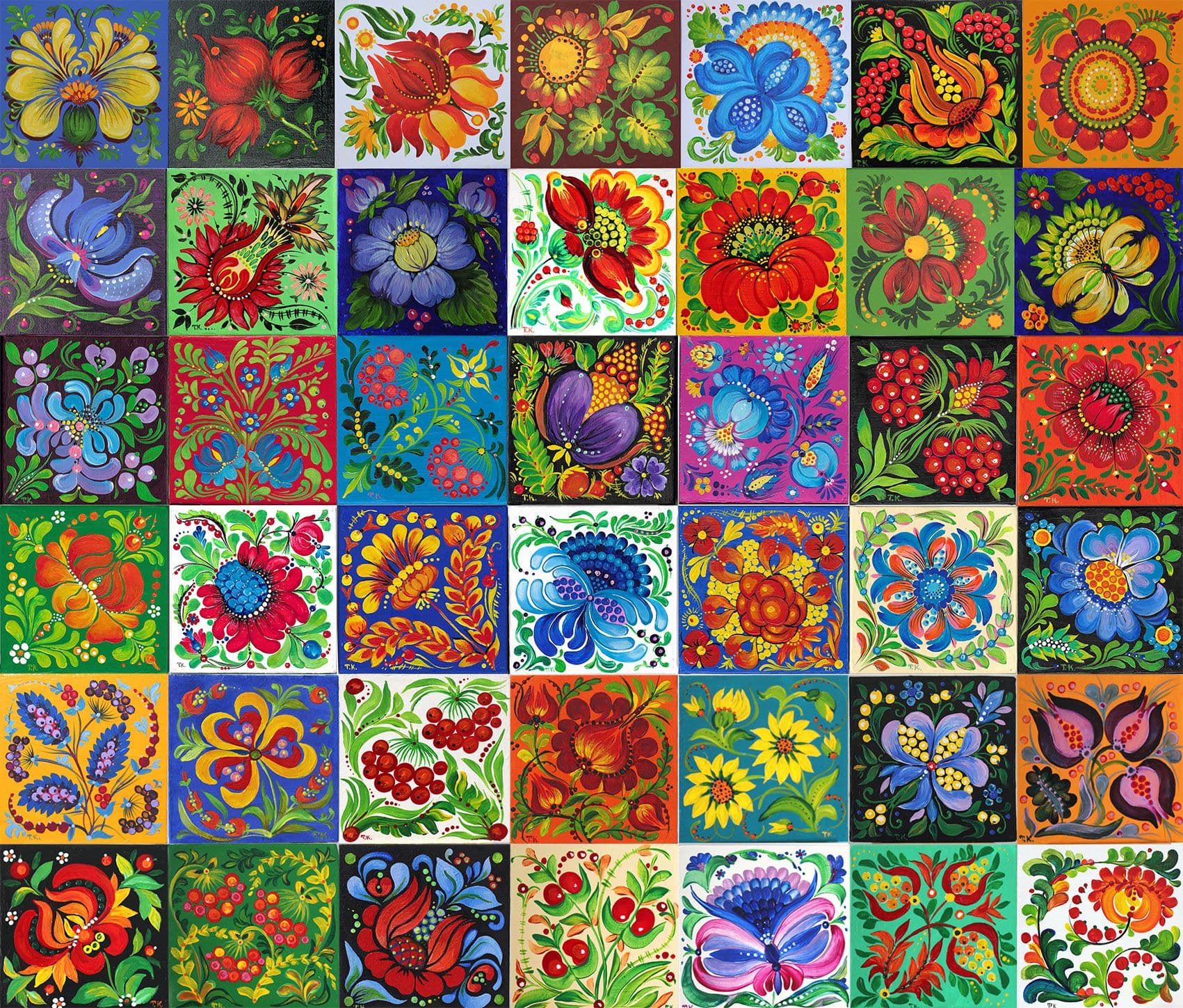
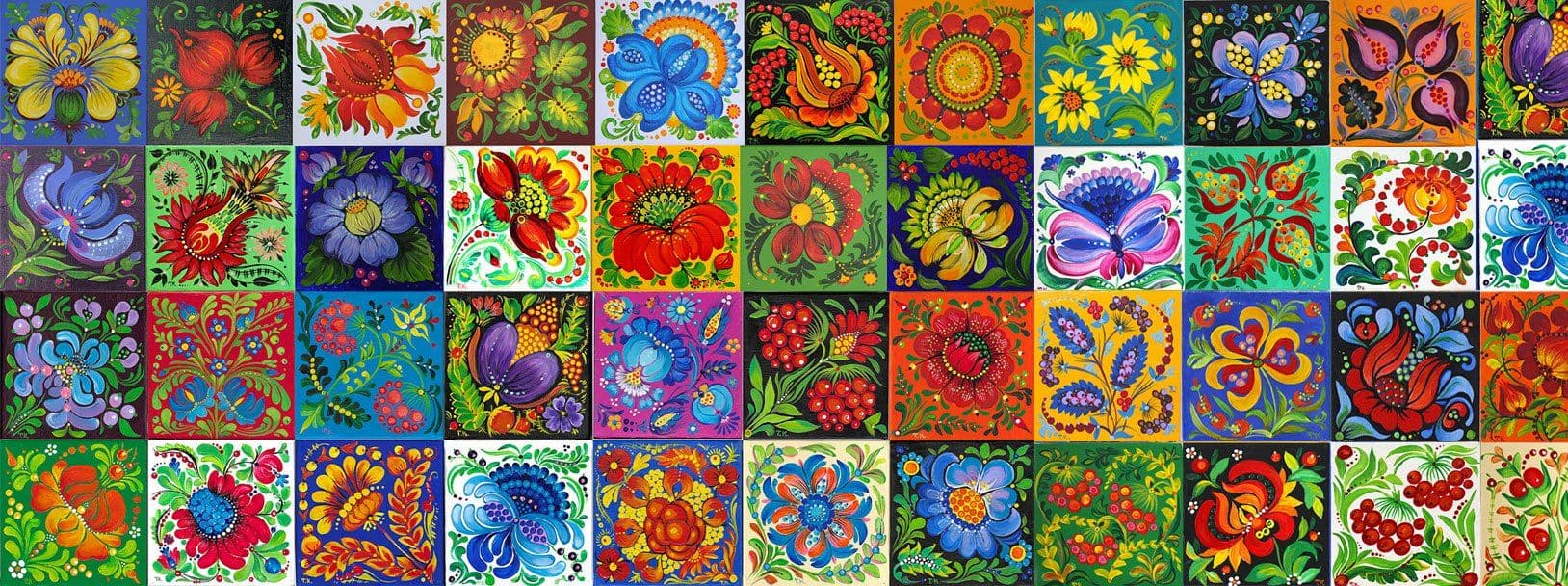
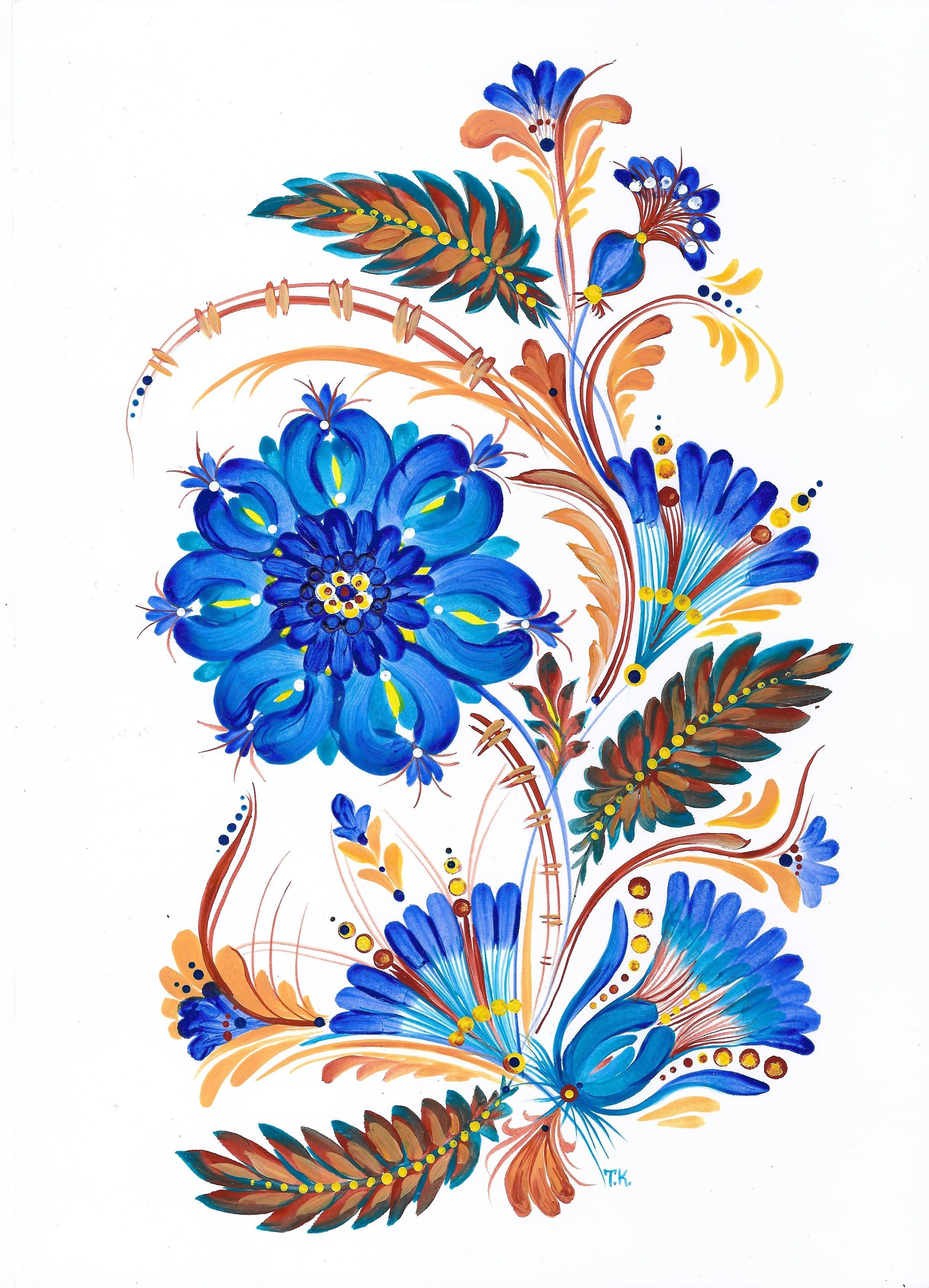
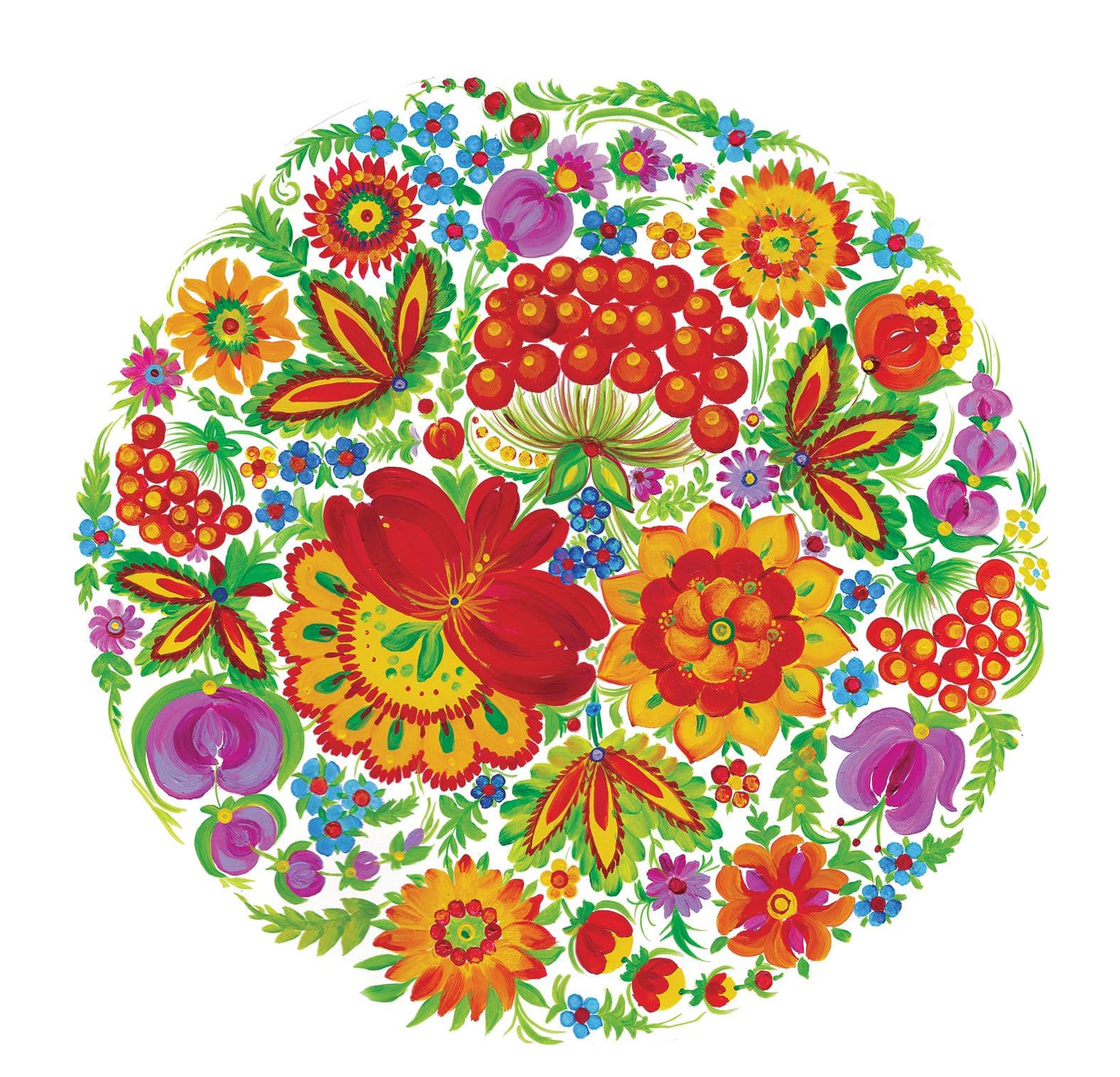
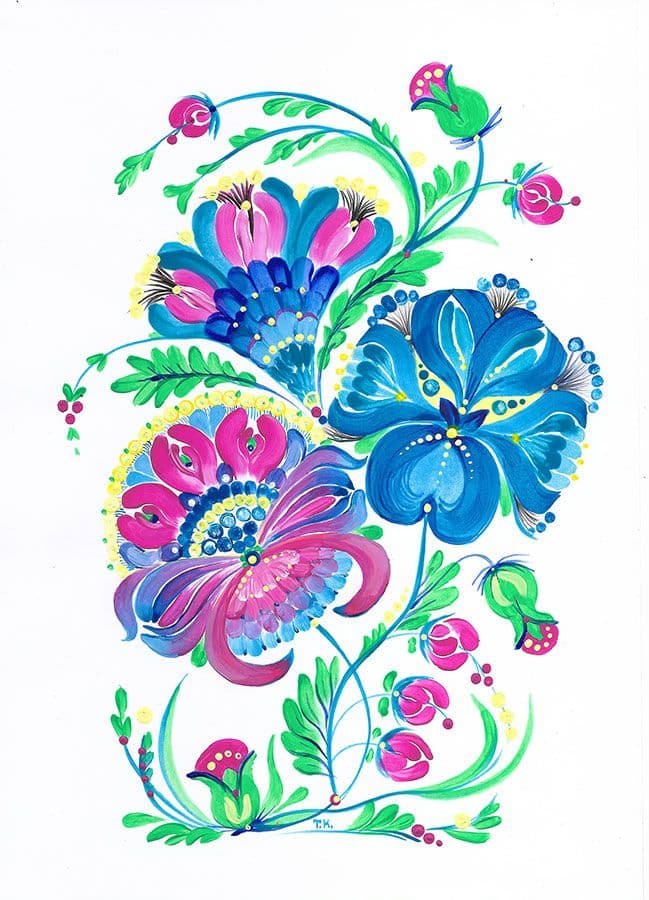
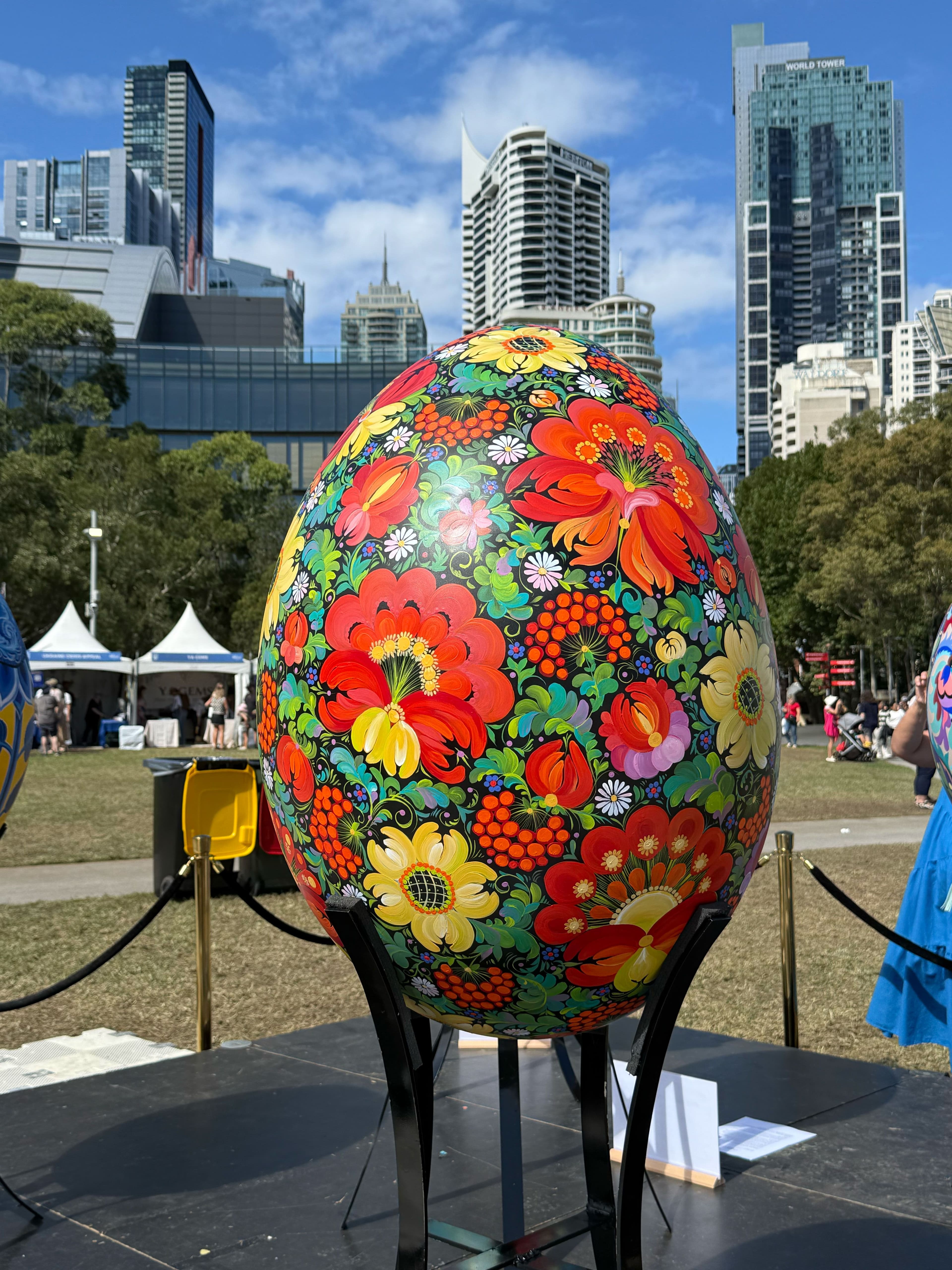
A Living Language of Colour. Petrykivka is a vibrant Ukrainian folk art style that originated in the village of Petrykivka. It is known for its intricate floral, natural, and animal motifs, traditionally painted on white backgrounds. These compositions symbolise harmony, life, and protection, and for generations have been used to decorate homes, everyday objects, and communal spaces. Today, Petrykivka is recognised by UNESCO as Intangible Cultural Heritage, acknowledging its role in preserving cultural identity through decorative painting.
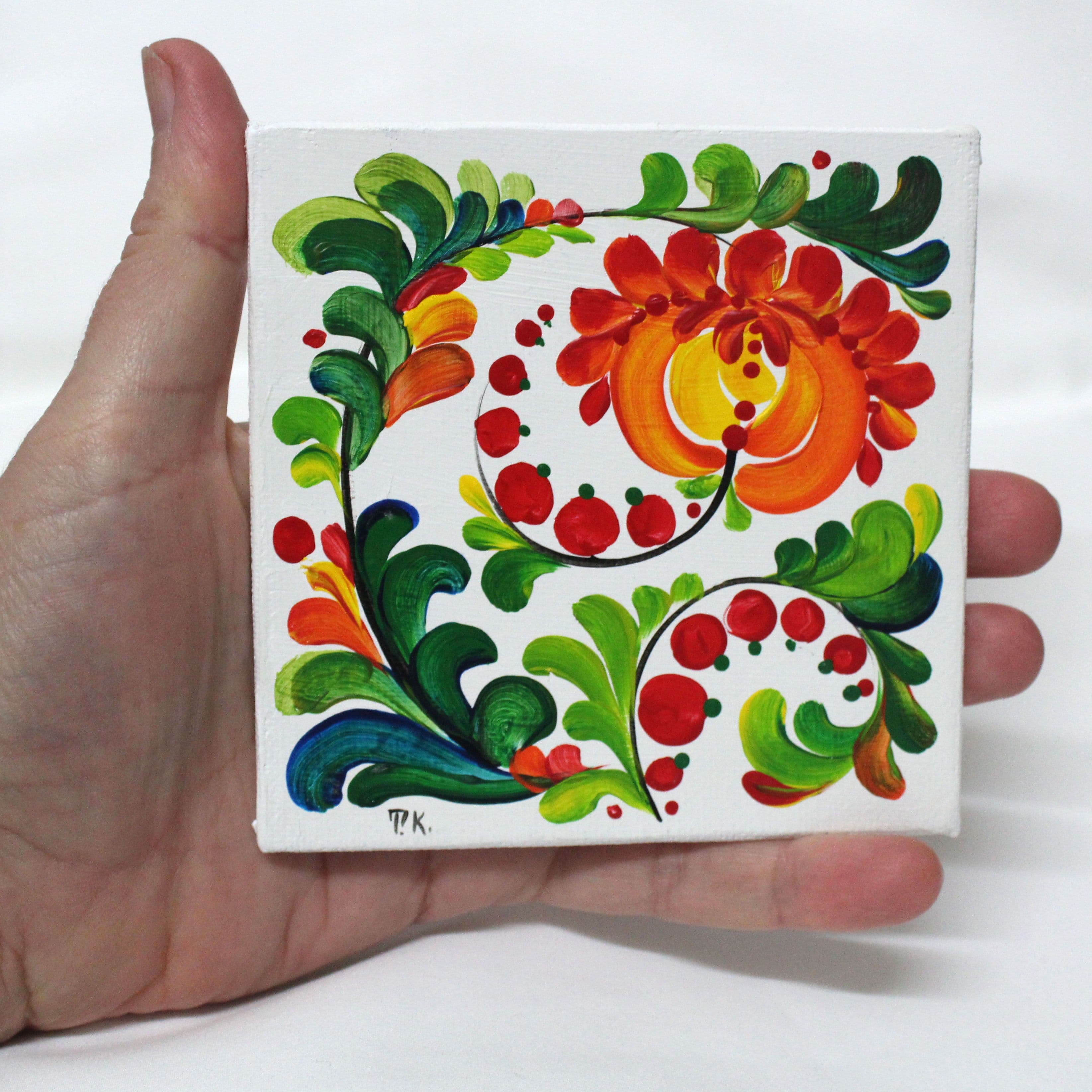
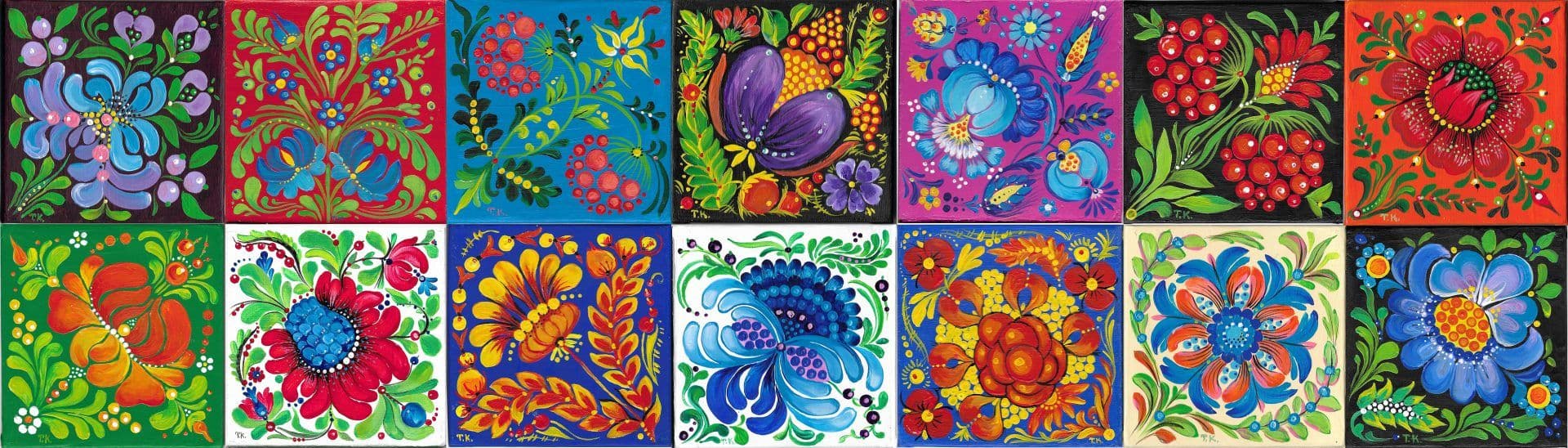
This tradition has always been close to my heart. What distinguishes Petrykivka from other painting styles is the way it is created — everything is built from expressive brushstrokes that feel like footprints left by different brushes and tools, sometimes even fingertip marks. Each stroke is visible, intentional, and alive, forming complex patterns through simple gestures.
Petrykivka is also unapologetically colourful, ornate, and joyful. Its energy comes from abundance rather than restraint, from movement rather than symmetry. These qualities resonate deeply with me. They speak of celebration, optimism, and a connection to nature that feels both playful and profound.
For me, Petrykivka is more than a decorative style. It is a visual language that carries memory, emotion, and identity — one that continues to inspire my work and reminds me of the power of colour, rhythm, and hand-made marks to tell stories across time and place.
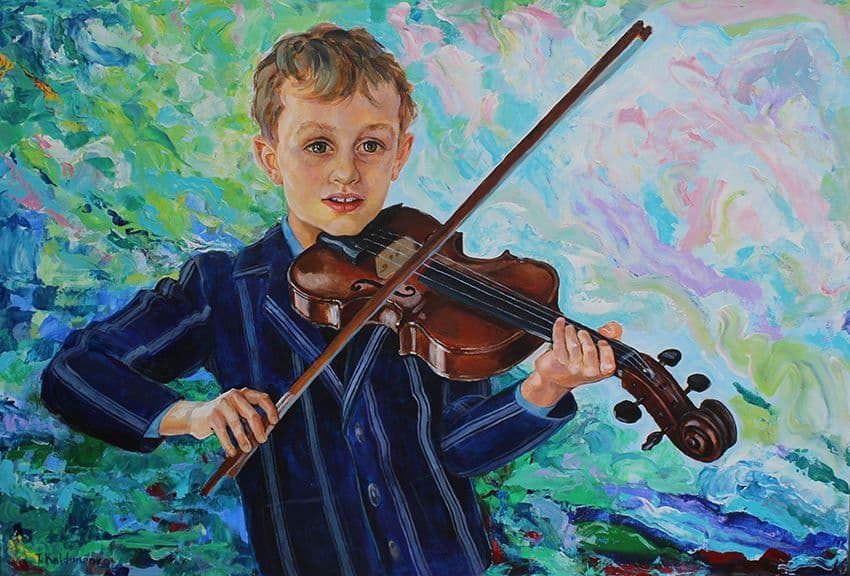
From time to time, someone commissions a portrait not simply as an artwork, but as a way to preserve a presence — a face, a character, a moment in life meant to last beyond the present. Portraits hold a unique place in art because they are created with the future in mind, becoming part of a family’s visual history. When I work on a portrait, my focus goes beyond likeness. I look for what makes a person recognisable to those who love them — a certain expression, a posture, a quiet strength or warmth that speaks of who they are. These details are often subtle, but they are what transform a portrait into something deeply personal. Commissioned portraits are often created to mark important moments: a milestone, a legacy, or a tribute. Over time, they become witnesses to family stories, passed from one generation to the next, carrying memory, identity, and connection. For me, creating a portrait is a shared process built on trust and attentiveness. It is about honouring the individual and creating a work that will continue to speak long after the sitting has ended — a lasting memory, held in paint.
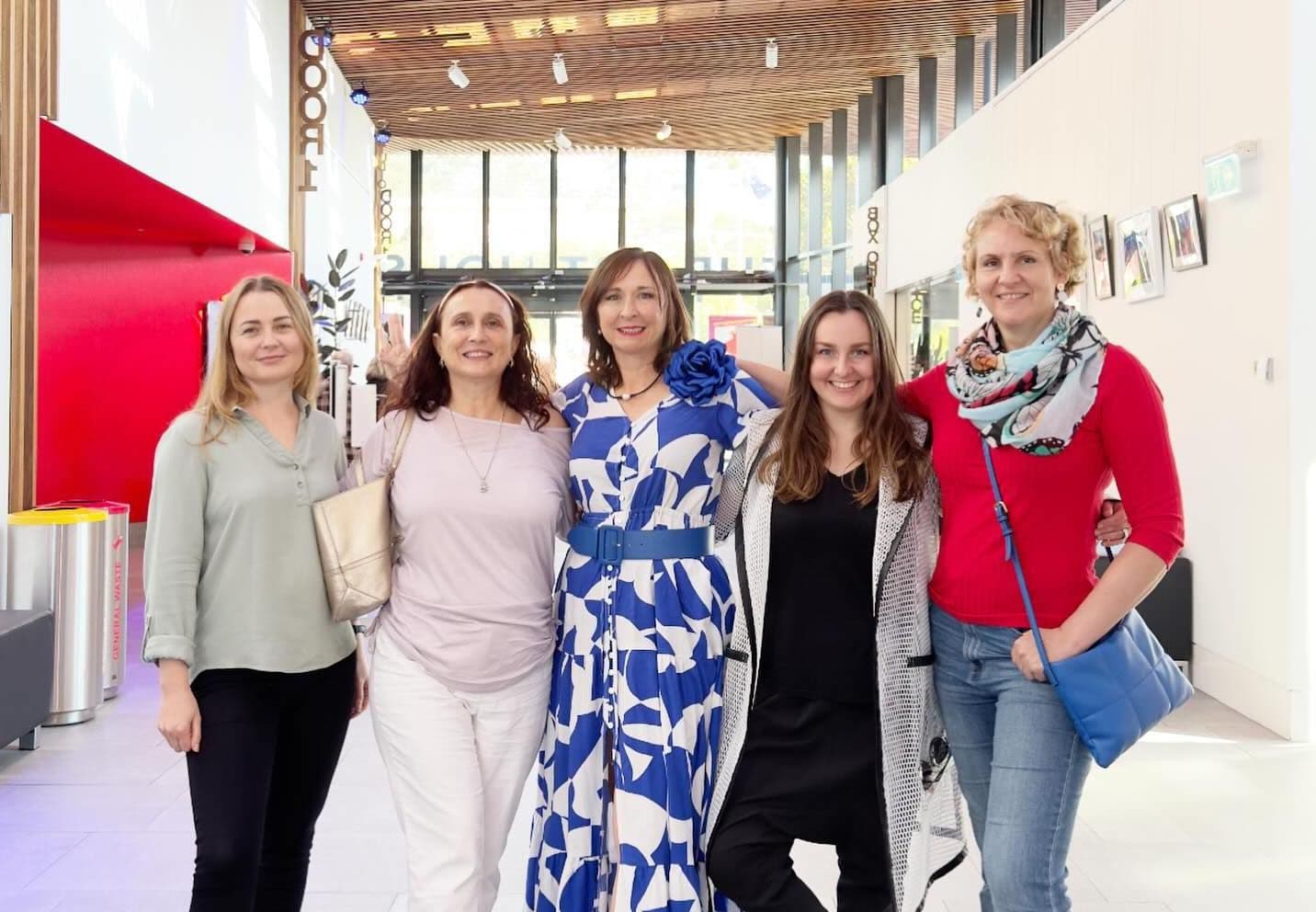
Breathing Space was a group exhibition by True Blue & a Little Bit of Yellow, held at The Art House, Wyong, NSW, from 1–25 May 2024. It felt good to return to the Central Coast and exhibit together once again. The works on display moved between bold painterly gestures and refined detail, with many pieces inspired by the coastal landscapes of the Central Coast and Sydney’s Northern Beaches. The exhibition offered space for colour, reflection, and connection — a moment to pause, breathe, and engage with art grounded in place and experience. Breathing Space was both a return and a continuation — of shared practice, shared values, and ongoing support through art.