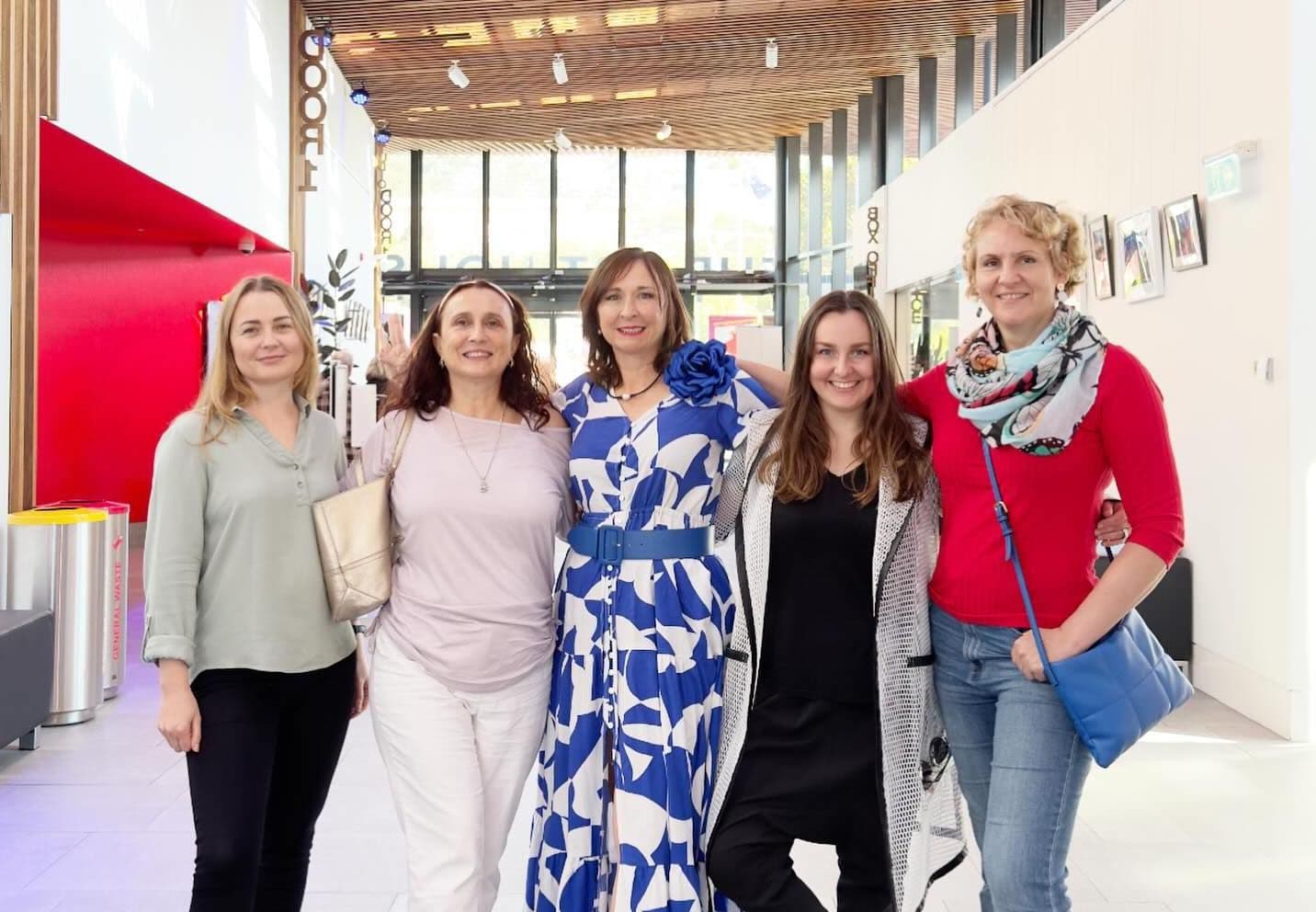
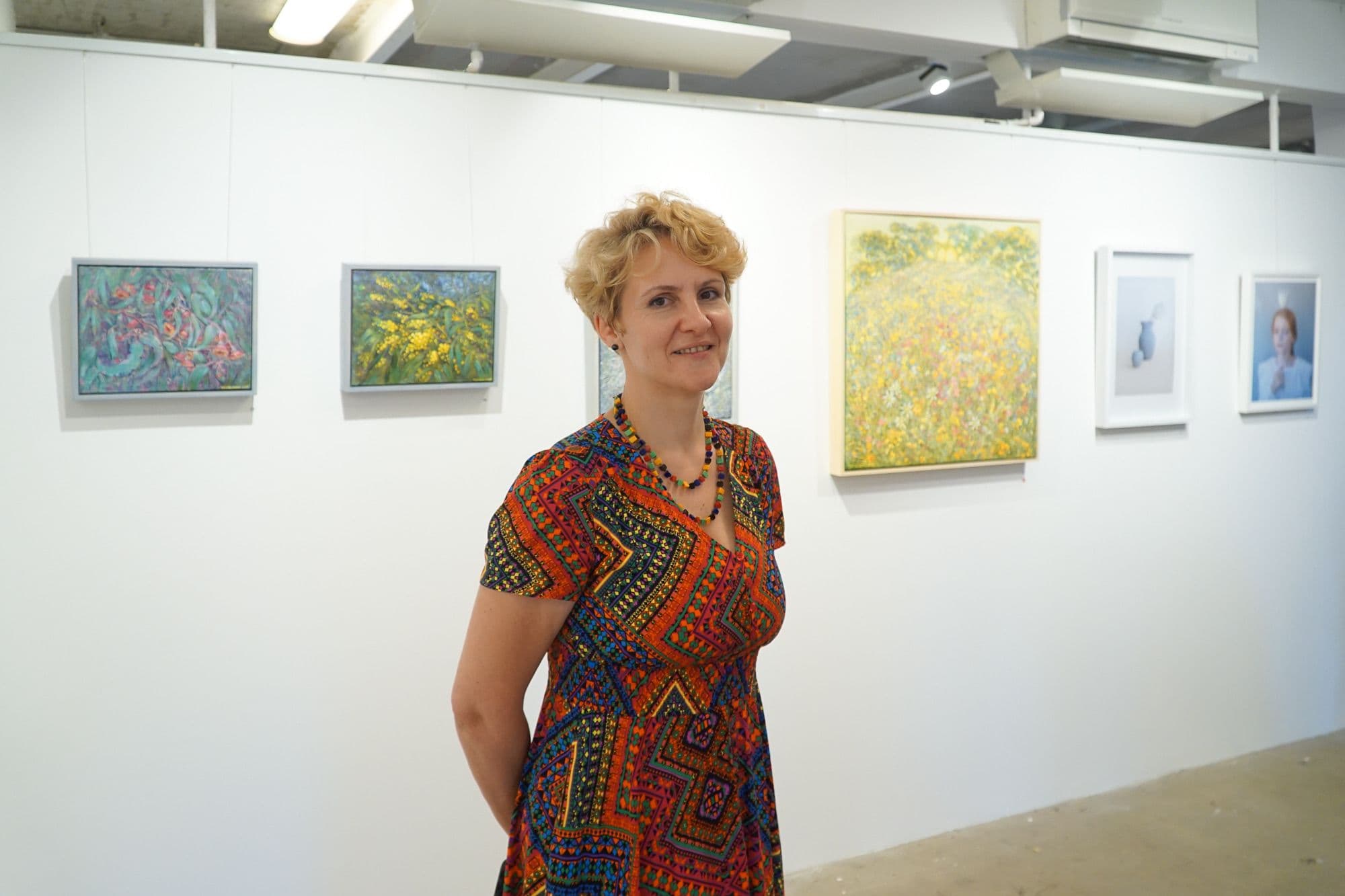
The 7th fundraising exhibition by True Blue & a Little Bit of Yellow took place at Incinerator Art Space, Willoughby, from 16–27 November 2022, and remains one of our most memorable milestones.
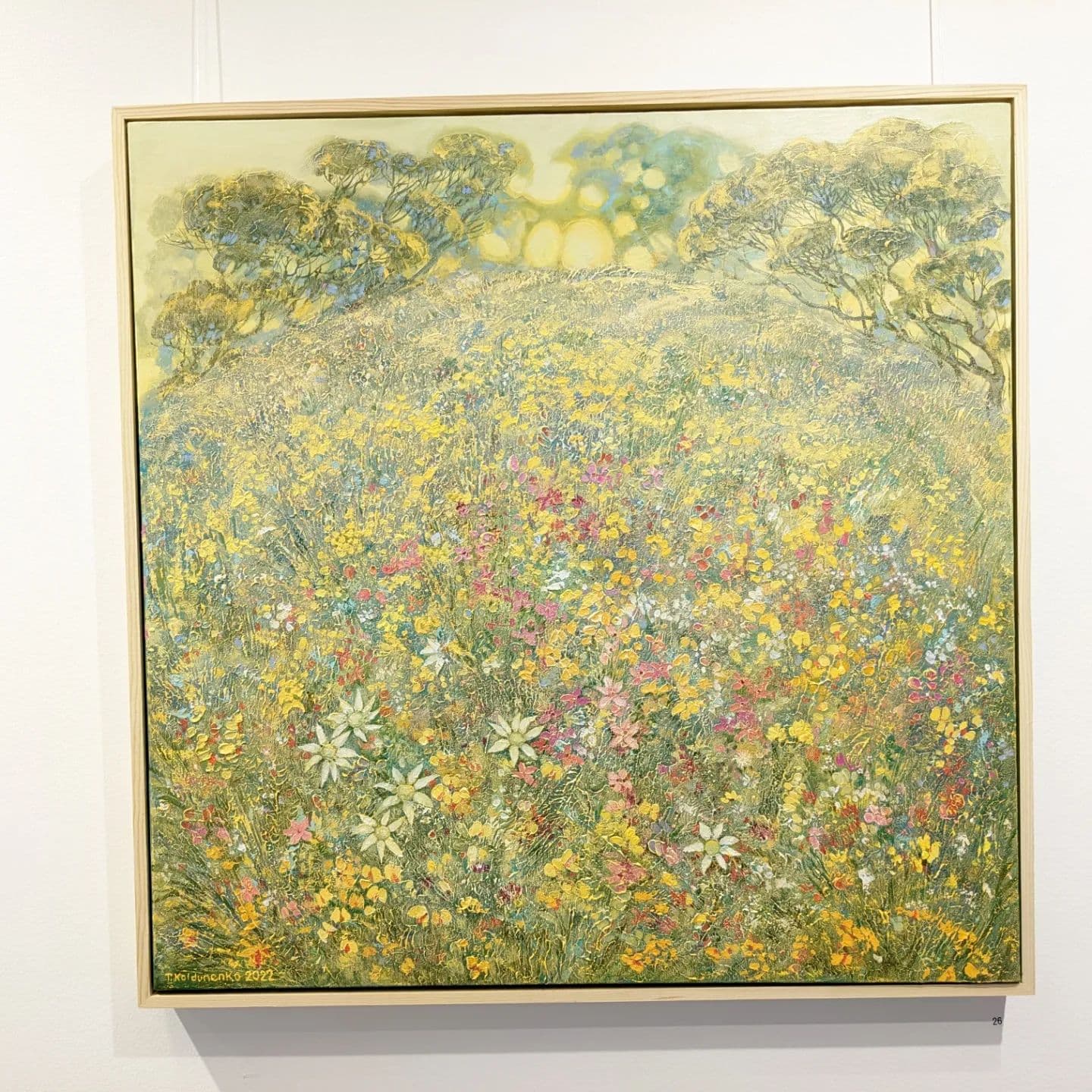
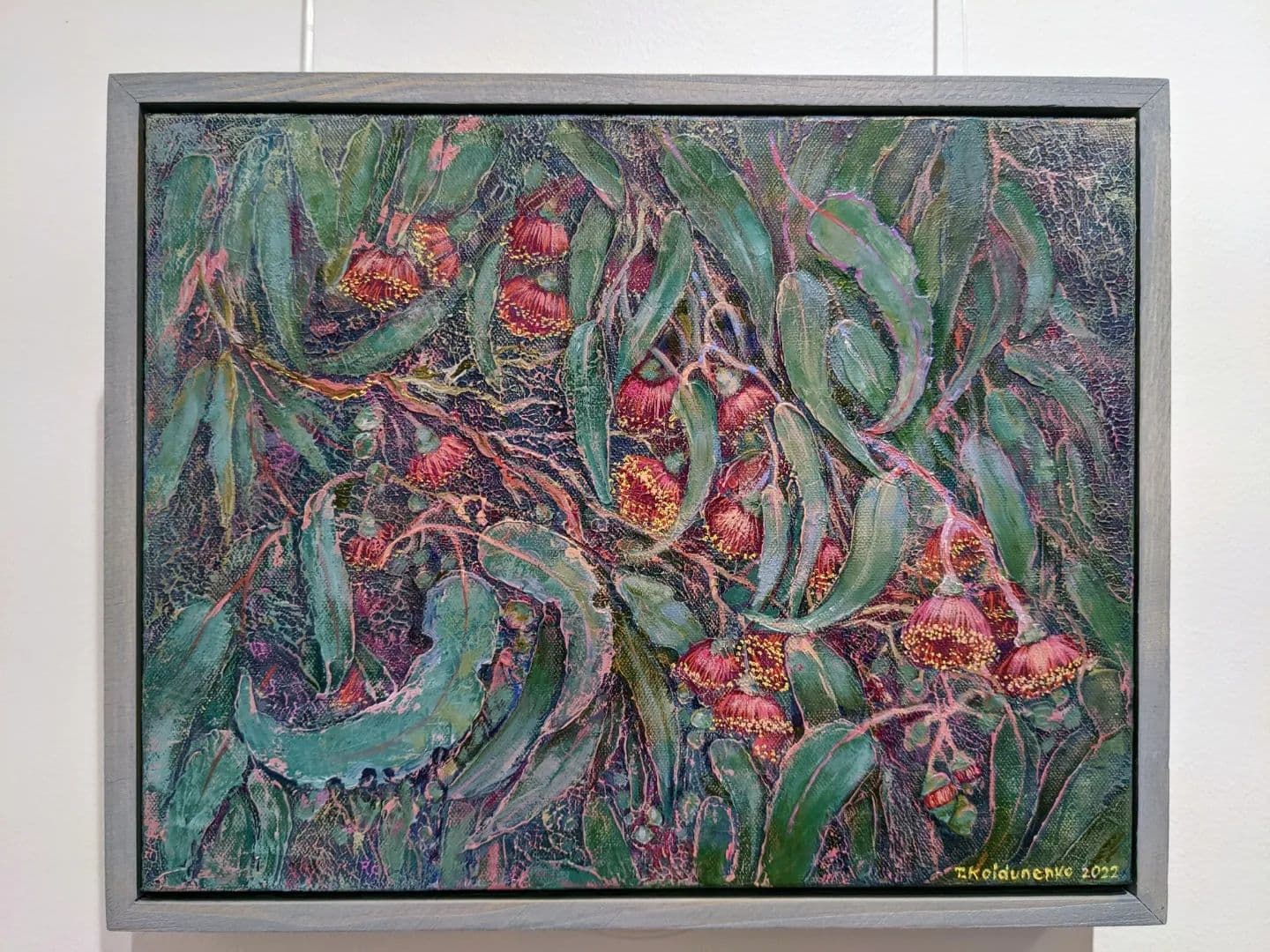
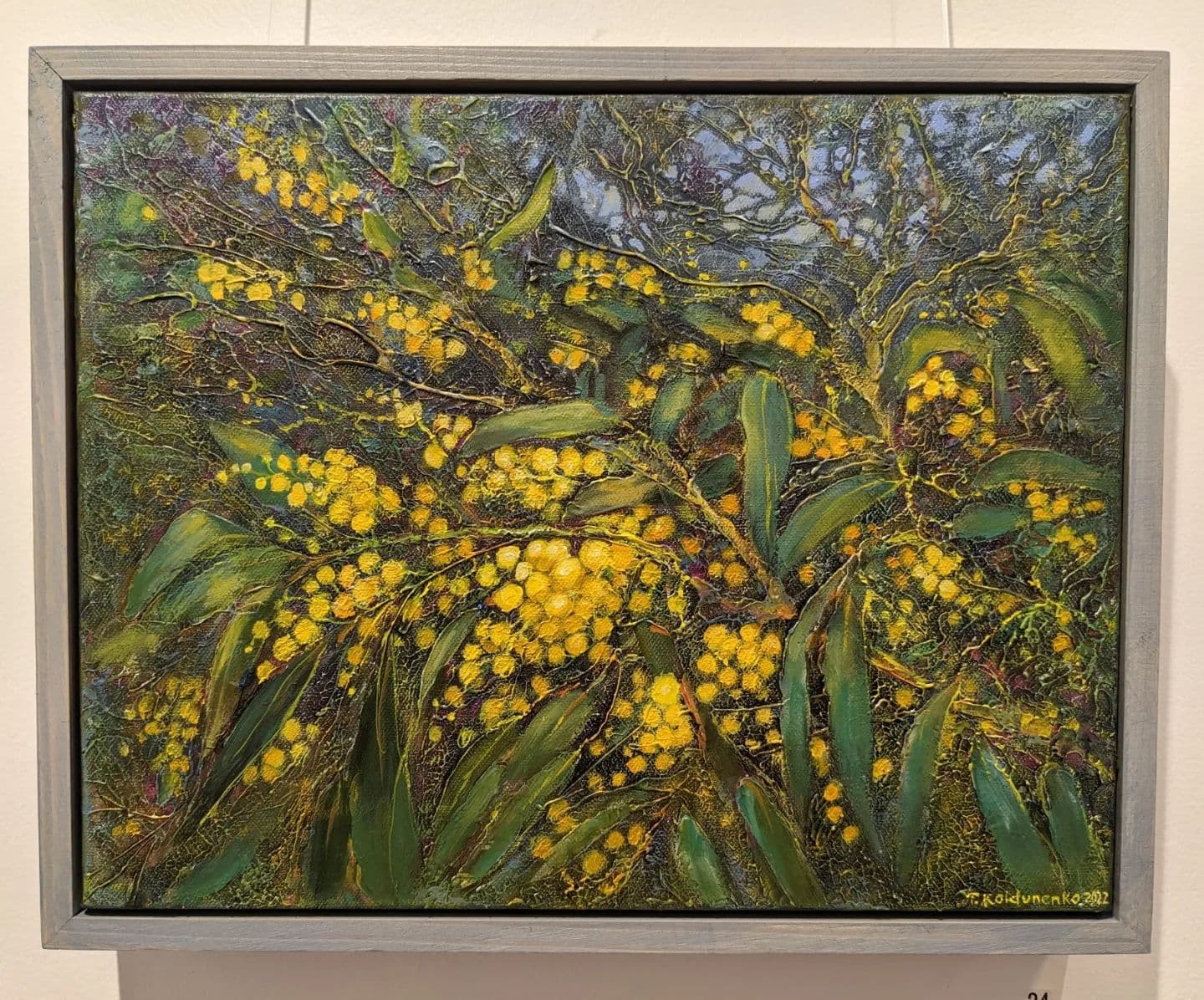
Over two weeks, we were overwhelmed by the support, kindness, respect, and genuine engagement from the local community. Australiana brought together seven artists and resulted in 18 of 30 artworks sold, with close to $10,000 raised to support people in Ukraine during a time of great need.
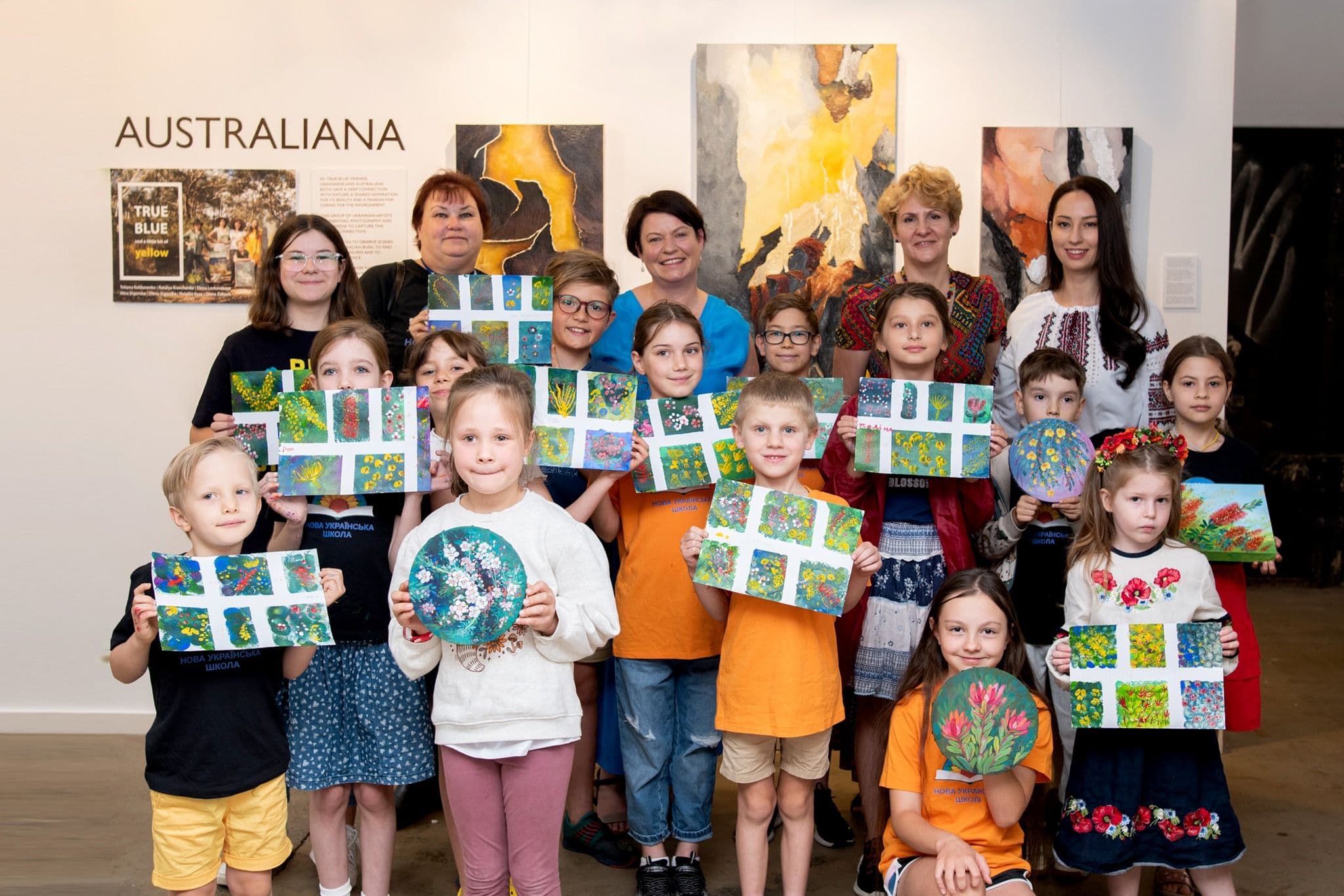
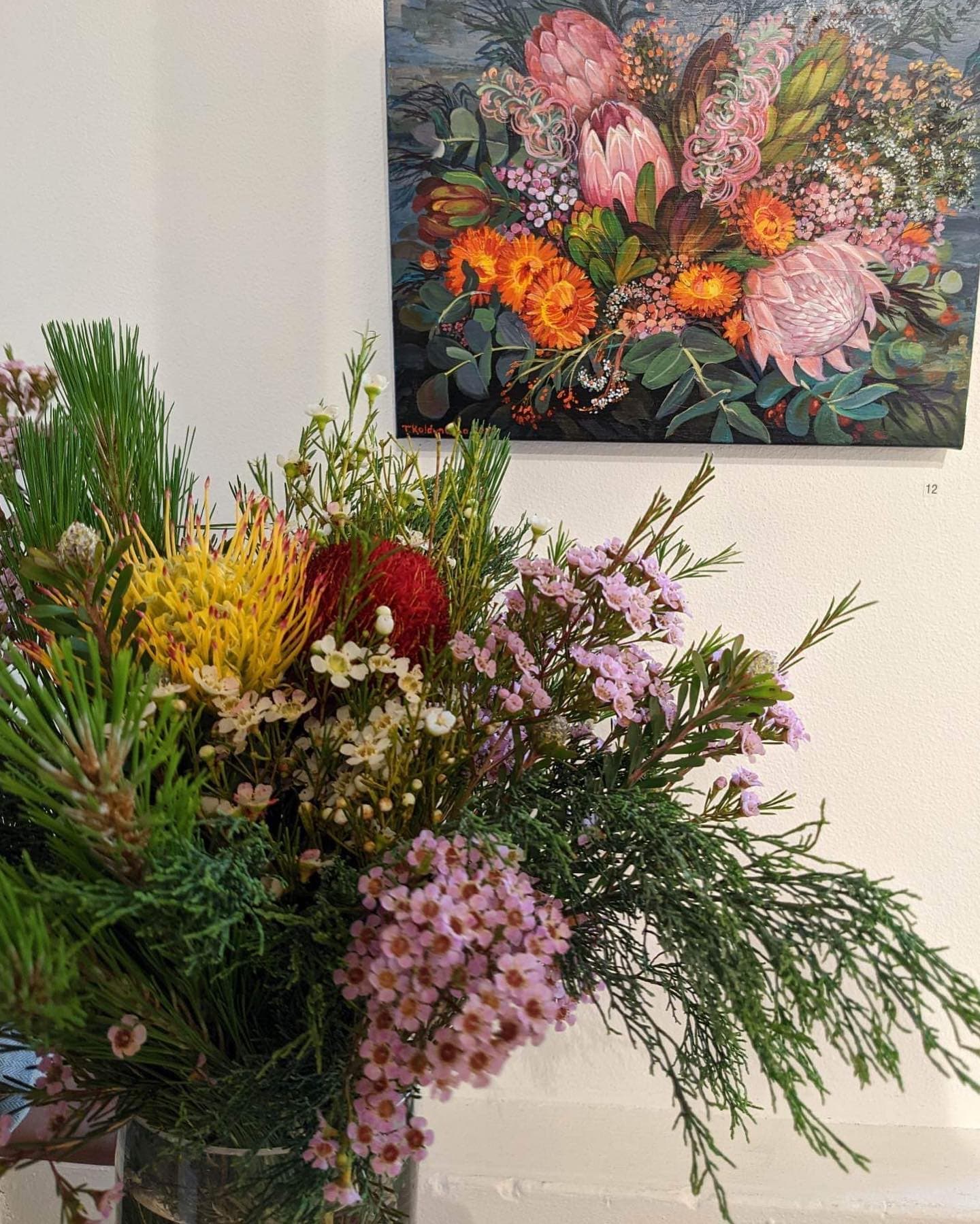
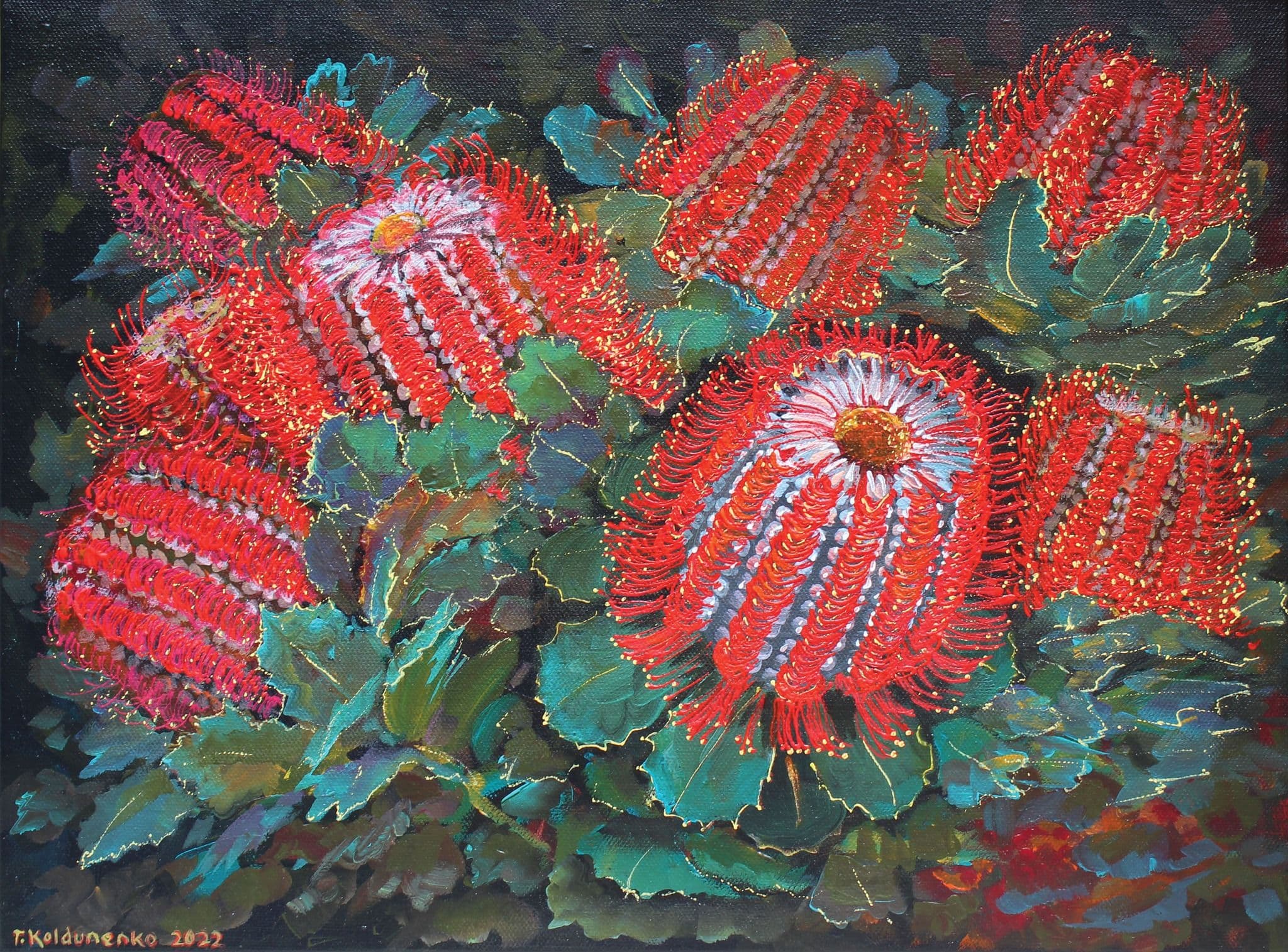
The exhibition was alive with connection and participation. I conducted two highly successful workshops on site, including a painting workshop where Scarlett Banksia bloomed across every artwork, and a special children’s workshop for students from Nova Ukrainian School. Seeing young participants engage with art in this context was deeply moving.
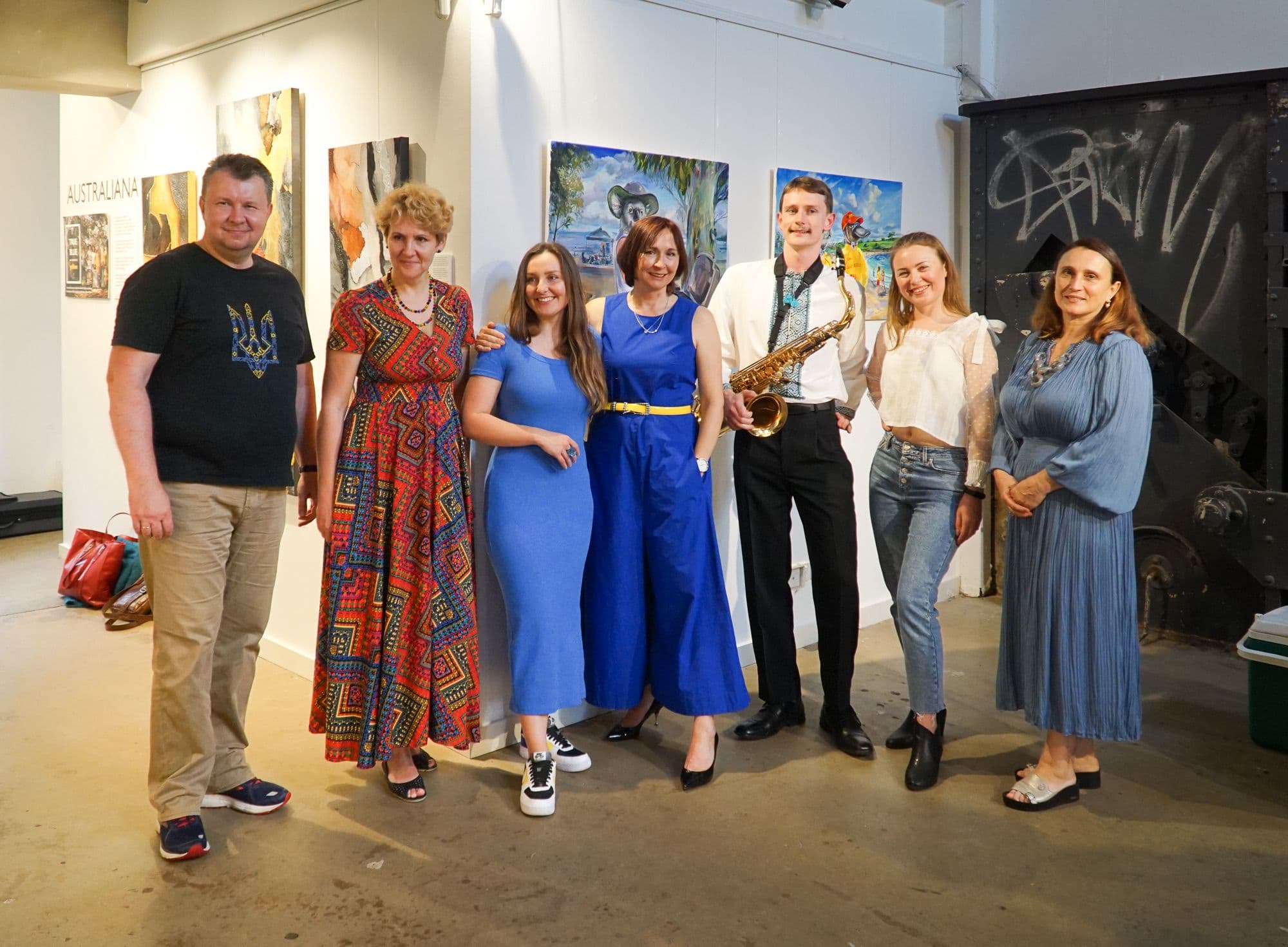
We were honoured to welcome remarkable supporters and guests at the opening, including Mayor of Willoughby City Tanya Taylor, MP Tim James, Honorary Consul of Ukraine in Sydney Jaroslav Duma, Deputy Chief of Mission Volodymyr Shalkivski, Co-chair of the Australian Federation of Ukrainian Organisations Kateryna Argirou, and many others. The opening was enriched by the music of Harrison Taranec on tenor saxophone, and the closing event was beautifully marked by violinist Maryana Sywak from Jaga Band.
Australiana was more than an exhibition — it was a shared effort, a meeting of art, community, and generosity, and a powerful reminder of what can be achieved when people come together with care and purpose.
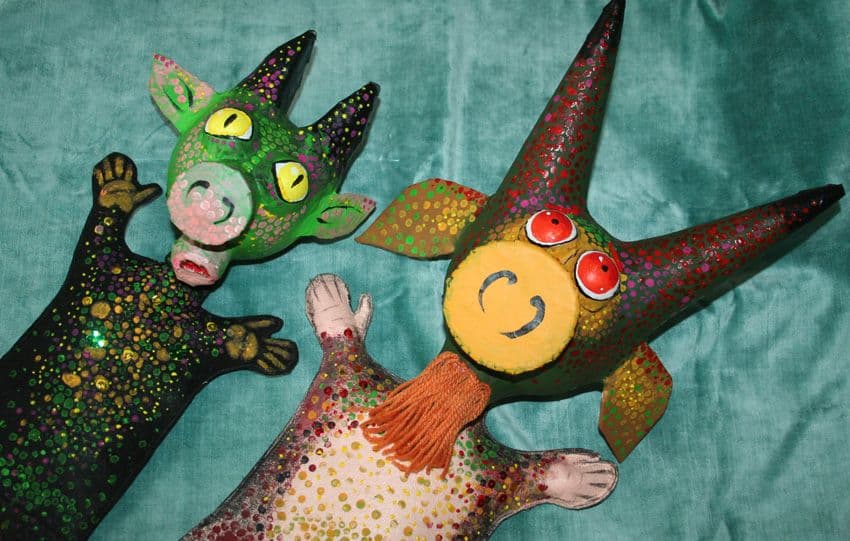
Every so often, a commission opens the door to an entirely new way of thinking. One such moment came when a client asked for something unexpected — a lightweight, sculptural object in the form of puppets. Creating puppets became an unusual and exciting way for me to explore my creativity. They sit somewhere between sculpture, design, and storytelling. Unlike painting, where the surface holds the narrative, puppets demand attention to volume, balance, texture, and movement. Even at rest, they suggest gesture, character, and presence. Working on these pieces allowed me to think beyond the wall and the frame, translating artistic ideas into tactile, three-dimensional forms. Each puppet became a small character — playful, expressive, and full of personality. This unexpected direction reminded me how important it is to stay open as an artist. New materials, new formats, and new requests can lead to discoveries that expand both practice and imagination — sometimes in the most surprising ways.
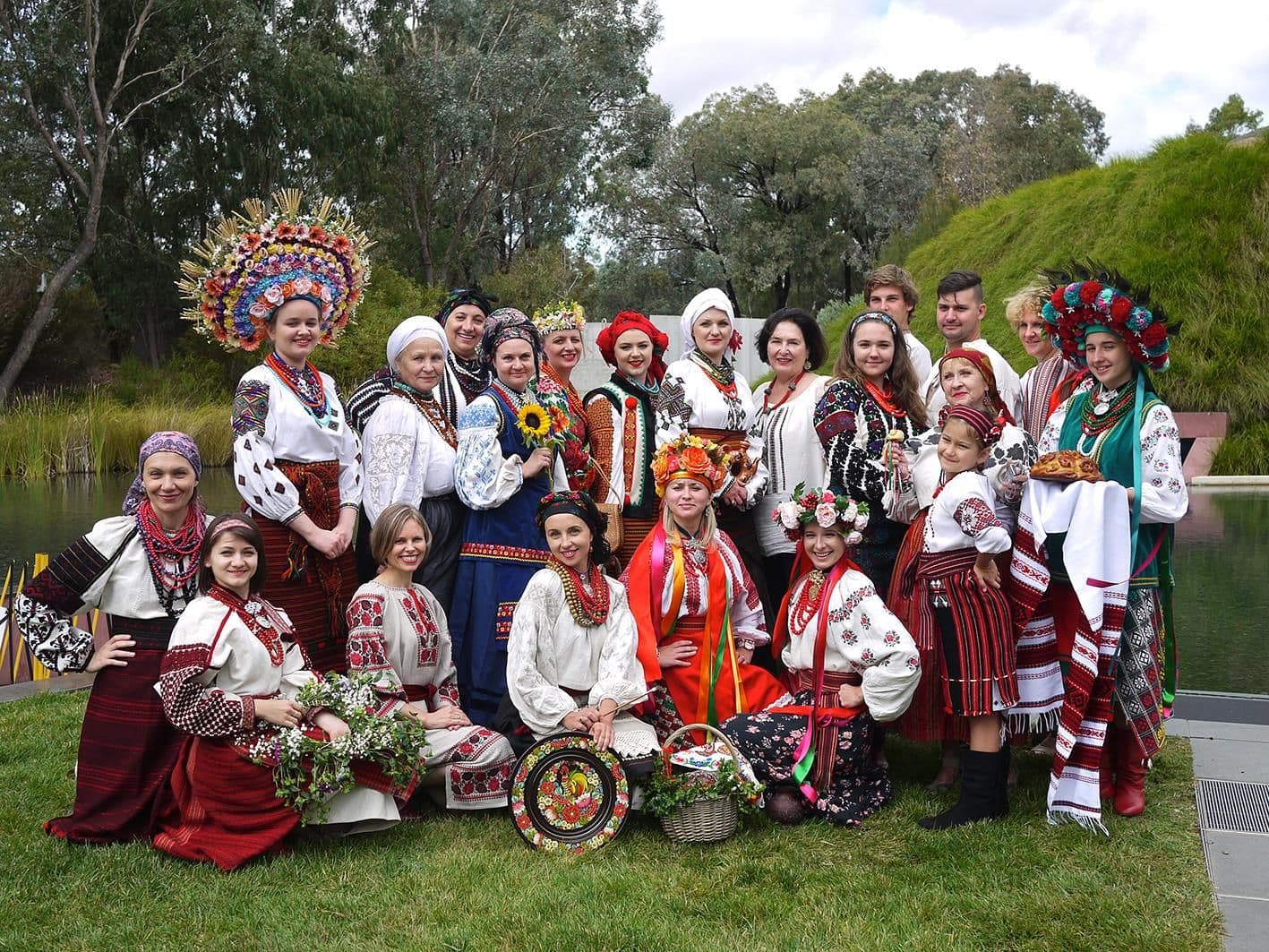
In 2018, I was invited to curate and coordinate a cultural performance for a diplomatic function at the National Gallery of Australia, at the request of the Embassy of Ukraine and on the initiative of Christine Syvenkyj-Bailey. The performance was created primarily from Christine Syvenkyj-Bailey’s private collection, with additional contributions from the collections of Sonia Mycak and Roxolana Mishalow. I am deeply grateful to them for their generosity and trust. This project was far more than event coordination — it was about giving history a voice. Every costume, ornament, and movement carried memory, identity, and meaning. My role was to carefully weave these elements into a coherent narrative that honoured tradition while allowing it to live and breathe in the present moment. I oversaw the entire creative and organisational process: selecting traditional Ukrainian costume elements, sourcing authentic garments and objects from private collectors, and recreating historical headpieces and jewellery where originals could not be used. I wrote the presentation script to guide the audience through the story, and designed all visual and printed materials — from slides and banners to invitations, gifts, and calendars — ensuring a unified visual language throughout the event. Behind the scenes, the work was equally intricate. I coordinated models and assistants, managed the careful transport of costumes and artefacts from Sydney to Canberra and back, and balanced countless logistical details so that, on the day, everything felt effortless and dignified. What emerged was not simply a performance, but a living expression of cultural memory.